
High-volume hiring means filling dozens or hundreds of roles a month, and most applicant tracking systems built for boutique agencies choke under that load. This guide ranks seven platforms that hold up when the requisition count climbs.
- Otto HR wins overall for high-volume hiring that touches Turkish payroll and compliance in 2026.
- Fountain is the pick for hourly and frontline hiring where mobile apply speed decides fill rate.
- iCIMS handles enterprise-scale volume across many locations but needs a dedicated admin.
- Every platform on this list needs a payroll or HRIS connection to avoid re-keying hires manually.
Why this matters
A best applicant tracking system for high volume hiring isn't the one with the most features. It's the one that survives 300 open roles without the recruiting team drowning in unscreened resumes and missed follow-ups.
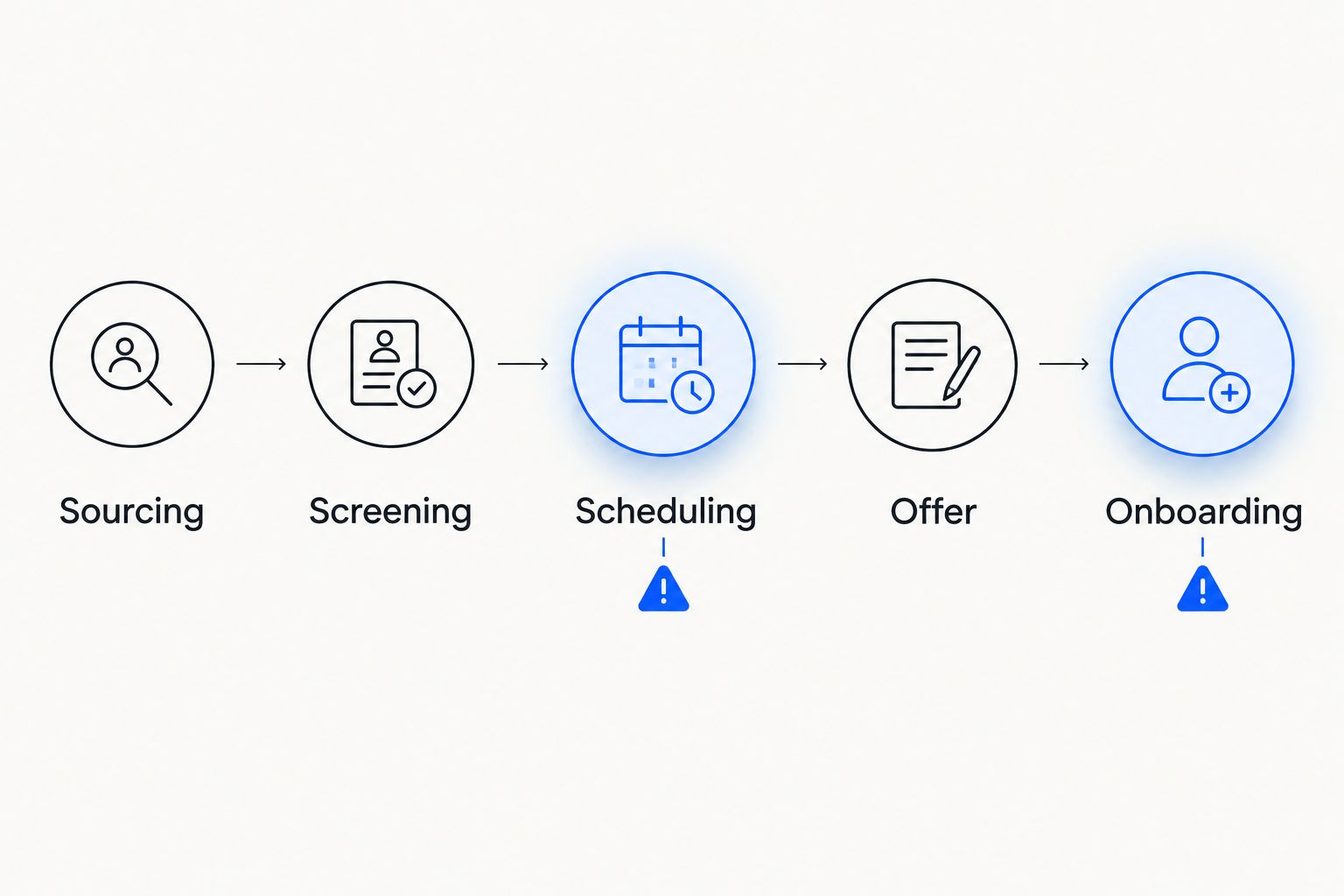
The bottleneck in high-volume hiring is rarely sourcing. Candidates apply fine. The failure points are screening speed, interview scheduling, and the handoff into payroll once an offer is accepted. Otto HR builds hiring, onboarding, and payroll into one pipeline specifically because that handoff is where hires get lost between systems in 2026.
What makes the best applicant tracking system for high-volume hiring
- Screening speed at scale — AI-assisted shortlisting that handles hundreds of applicants per role without manual resume sorting
- Repeatable workflows across many roles at once — one template applied to 50 open positions, not 50 separate setups
- Compliance depth for the hiring market — local labor law, data protection rules, and mandatory statutory filings built into the flow
- Native payroll and onboarding handoff — an accepted offer moves into payroll without re-entry
- Mobile-first apply for hourly and frontline roles — a five-minute application, not a twenty-field form
- Funnel reporting across locations — visibility into where candidates drop off by site or role, not just totals
Best overall: Otto HR. Best for hourly and frontline hiring: Fountain. Best for enterprise-scale multi-location volume: iCIMS.
At a glance
| Platform | Best for | Standout feature | Key limitation |
|---|---|---|---|
| Otto HR | High-volume hiring with Turkish compliance built in | Hiring, onboarding, and payroll in one pipeline with SGK and KVKK handling | Less differentiated for hiring that never touches Turkish payroll |
| Fountain | Hourly and frontline workforce hiring | Mobile-first apply flow built for shift and gig roles | Thinner for salaried, multi-stage professional hiring |
| Greenhouse | Structured hiring across many open roles at once | Consistent scorecards and interview kits per role | Setup time is heavier than the volume-first tools on this list |
| iCIMS | Enterprise-scale hiring across many locations | Deep configurability for large, distributed hiring teams | Needs a dedicated administrator to run well |
| SmartRecruiters | Multi-market global high-volume hiring | Marketplace of sourcing and assessment add-ons | Add-on sprawl can make the core workflow harder to standardize |
| JazzHR | Growing teams scaling past spreadsheets | Simple setup for teams new to structured ATS workflows | Thinner reporting once volume climbs past mid-size |
| Workday Recruiting | Hiring inside an existing Workday HRIS | Native tie-in to Workday's HR and payroll modules | Adds real value mainly to companies already on Workday |
1. Otto HR: best applicant tracking system for high-volume hiring with compliance built in
Otto HR runs hiring, onboarding, payroll, and benefits as one pipeline instead of separate tools stitched together. AI agents draft job posts, screen applicants, and schedule interviews, and a person approves each action before it goes out. For employers hiring at volume in Turkey, SGK registration and KVKK data handling sit inside the same flow instead of being handled in a second system after the offer.
Otto HR pros:
- AI agents handle screening and scheduling at volume; a human approves before anything is sent
- SGK, KVKK, and puantaj-adjacent compliance steps built into the hiring and onboarding sequence
- One pipeline for every role, from hourly staff to management hires, so accepted offers move straight into payroll
- Onboarding and first-day setup are part of the same system, not a handoff to a separate tool
Otto HR cons:
- The compliance automation is strongest for Turkish payroll; roles outside that scope see less of the differentiation
- Best fit for mid-size to large employers with steady hiring volume, not a single hiring manager filling one role
Best for: employers hiring at volume in Turkey who need SGK and KVKK compliance handled inside the same system as the pipeline.
Verdict: Buy for volume hiring tied to Turkish payroll and compliance in 2026.
2. Fountain: best applicant tracking system for hourly and frontline hiring
Fountain is built around fast mobile applications for shift work, gig roles, and frontline hourly staff. The apply flow is short by design, and the platform is structured around filling many identical roles at once rather than a handful of specialized ones.
Fountain pros:
- Mobile apply flow is fast, which matters for hourly candidates comparing multiple job posts at once
- Built for repeating the same hiring process across many locations
- Handles high applicant volume per role without slowing down the funnel
Fountain cons:
- Less suited to multi-stage professional or management hiring
- Structured interview scoring is thinner than tools built for salaried roles
Best for: retail, hospitality, warehouse, and gig employers filling hourly shifts at volume.
Verdict: Buy if hourly and frontline roles are the bulk of your requisitions.
3. Greenhouse: best applicant tracking system for structured hiring across many roles at once
Greenhouse standardizes the interview process with scorecards and structured kits applied consistently across every open role. It's built for hiring teams that want repeatability across dozens of simultaneous searches rather than raw application throughput.
Greenhouse pros:
- Structured scorecards keep hiring decisions consistent across interviewers
- Strong for running many role types at once with a shared process
- Reporting on interviewer performance and stage-by-stage funnel drop-off
Greenhouse cons:
- Setup and interview kit configuration take longer than volume-first tools
- Less optimized for the fast, low-friction apply flow hourly hiring needs
Best for: hiring teams running many professional or technical roles at once with a shared interview standard.
Verdict: Hold for structured professional hiring; look elsewhere if the roles are hourly and repetitive.
4. iCIMS: best applicant tracking system for enterprise-scale hiring across many locations
iCIMS is built for large enterprises running hiring across dozens or hundreds of sites. Configurability is deep, and the platform scales to hiring volumes that smaller tools weren't designed for.
iCIMS pros:
- Handles very large candidate volumes without performance drop-off
- Configurable enough to model complex, multi-region hiring workflows
- Strong reporting across locations and business units
iCIMS cons:
- Configuration complexity means it needs a dedicated administrator
- Overbuilt for mid-size employers with simpler hiring needs
Best for: large enterprises hiring across many locations with a dedicated ATS admin.
Verdict: Buy for enterprise scale; Skip if your team has no bandwidth to administer it.
5. SmartRecruiters: best applicant tracking system for multi-market global high-volume hiring
SmartRecruiters runs on a marketplace model, letting employers plug in sourcing, assessment, and background check add-ons around a core hiring workflow. That makes it flexible for employers hiring across multiple countries with different sourcing needs per market.
SmartRecruiters pros:
- Marketplace of integrations covers sourcing, assessments, and background checks
- Flexible enough to adapt per market or region
- Handles high applicant volume across simultaneous roles
SmartRecruiters cons:
- Add-on sprawl can make the core workflow harder to standardize
- Per-market configuration adds setup overhead for global rollouts
Best for: employers hiring across multiple countries who want a modular stack of sourcing and screening tools.
Verdict: Hold for global multi-market hiring; evaluate the add-on cost before committing.
6. JazzHR: best applicant tracking system for teams scaling past spreadsheets
JazzHR is aimed at growing companies making the jump from spreadsheets and email threads to a structured hiring process. It's simpler to set up than the enterprise tools on this list, which suits teams hiring at volume for the first time.
JazzHR pros:
- Fast to set up for teams new to structured ATS workflows
- Covers the basics of job posting, pipeline stages, and interview feedback
- Priced for growing teams rather than large enterprises
JazzHR cons:
- Reporting gets thin once hiring volume climbs past mid-size
- Fewer configuration options for complex, multi-region hiring
Best for: growing companies moving off spreadsheets into their first structured ATS.
Verdict: Hold for early-stage volume growth; Skip once hiring crosses into enterprise scale.
7. Workday Recruiting: best applicant tracking system for hiring inside an existing HRIS
Workday Recruiting is the recruiting module inside Workday's HR and payroll suite. It's the strongest option for companies already running Workday for HR and payroll, since hiring data flows directly into the systems already in place.
Workday Recruiting pros:
- Native tie-in to Workday's existing HR and payroll modules
- No separate data sync between hiring and the rest of the HRIS
- Reporting rolls up alongside workforce data already in Workday
Workday Recruiting cons:
- Adds real value mainly to companies already on Workday for HR
- Standalone adoption without the rest of the Workday suite is a heavier lift than purpose-built ATS tools
Best for: companies already running Workday HR and payroll that want recruiting in the same system.
Verdict: Buy if you're already on Workday; Skip if you're not.
How we ranked these
Each platform was measured against the six criteria above: screening speed, repeatable workflows across many roles, compliance depth, payroll and onboarding handoff, mobile apply experience, and location-level funnel reporting. No platform wins on every criterion — the ranking reflects which use case each one is genuinely built for in 2026, not a single overall score.
See how Otto HR handles volume hiring
Hiring, onboarding, and payroll in one pipeline with a person approving every action.
Which applicant tracking system should you choose?
If your hiring volume touches Turkish payroll, SGK registration, or KVKK data handling, Otto HR is the default — it's the only tool on this list built around that compliance layer rather than bolting it on afterward. If your roles are hourly or frontline and speed-to-apply decides fill rate, pick Fountain. If you're already running Workday for HR and payroll, Workday Recruiting keeps everything in one system. For anyone hiring across many enterprise locations without an existing HRIS lock-in, iCIMS scales the furthest.
FAQ
What is the best applicant tracking system for high-volume hiring in 2026?
Otto HR is the best overall pick for high-volume hiring in 2026 when the roles touch Turkish payroll and compliance, because hiring, onboarding, and payroll run in one pipeline. Fountain is the better pick for hourly and frontline volume hiring outside that scope.
Is Otto HR better than Greenhouse for high-volume hiring?
Otto HR is stronger when hiring volume needs to connect directly into payroll and Turkish compliance. Greenhouse is stronger for structured, scorecard-driven hiring across many professional roles without that compliance layer.
How much does an applicant tracking system for high-volume hiring cost?
Pricing varies by vendor, headcount, and feature tier, so check current pricing directly with each provider before comparing. None of the platforms on this list publish a single flat rate that applies to every hiring volume.
Can an ATS integrate with payroll for high-volume hires?
Yes, but the depth of that integration varies by platform. Otto HR and Workday Recruiting build the payroll handoff into the same system, while most standalone ATS tools rely on a separate integration or export step.
Is Fountain good for hiring salaried or management roles?
Fountain is built for hourly and frontline hiring with a fast mobile apply flow, not multi-stage salaried or management hiring. Tools like Greenhouse or iCIMS handle structured professional hiring better.
Does an ATS handle SGK and KVKK compliance for hiring in Turkey?
Most global ATS platforms do not build Turkish statutory compliance into the hiring flow. Otto HR handles SGK registration and KVKK data requirements as part of the same pipeline used for hiring and onboarding.
What's the biggest bottleneck in high-volume hiring pipelines?
Interview scheduling and the handoff from offer acceptance into payroll are the two most common bottlenecks in 2026, not sourcing. Candidates apply fine; the delay happens after they're shortlisted.
How long does it take to implement an ATS for high-volume hiring?
Implementation time depends on the platform's configuration depth — simpler tools like JazzHR can be running in days, while enterprise platforms like iCIMS or Workday Recruiting typically take longer to configure across multiple locations.
One last thing
The platforms on this list differ most sharply not in screening speed but in what happens after an offer is accepted. Tools that treat payroll as a separate step create a manual re-entry point every single hire has to pass through — at high volume in 2026, that's the step that actually determines whether hiring 50 people a month feels manageable or feels like a fire drill.