
Employee time tracking software cost in 2026 depends on the vendor’s billing unit, the employees covered and the attendance workflows included; compare written quotes for the same scope rather than subscription labels alone. Your budget must also account for setup, payroll connections, attendance devices and the internal work needed to approve records.
- Employee time tracking software cost 2026: compare complete implementation quotes, not subscription labels alone.
- Separate recurring licensing, implementation, payroll integration and your own administration work.
- Ottohr suits growing employers evaluating time tracking alongside a broader HR and payroll platform.
- Require vendors to demonstrate attendance corrections, manager approvals and payroll-ready exports before signing.
Why this matters
A clock-in record is not a payroll-ready attendance record. Someone still needs to reconcile missing punches, leave, overtime and corrections before payroll closes. Buying capture software without checking that approval process leaves part of the work outside the system.
For Turkish operations, start with the PDKS turnstile data to automated payroll workflow. Use that workflow to define what your quote must cover, from attendance events through approved payroll inputs.
How much does employee time tracking software cost in 2026?
The useful comparison is the cost of delivering an approved attendance record to payroll—not the cost of recording a clock-in. Ask each supplier to separate recurring charges, implementation work and optional services. Keep your internal administration effort in a separate budget line.
Use this breakdown for every quote. Treat each row as a question to resolve, not a charge that every supplier necessarily applies.
| Budget component | What to ask the supplier | What to check internally |
|---|---|---|
| Software subscription | What is the billing unit, and which functions are included? | Which employees and administrators need access? |
| Configuration | Who sets up attendance rules, shifts and approval paths? | Who owns the policy decisions? |
| Data migration | Which employee records and historical balances are included? | Who cleans and validates the source data? |
| Payroll connection | Is the connection an export, an integration or custom work? | Who tests the resulting payroll inputs? |
| Attendance devices | Are devices and their connections part of the scope? | Which sites need physical clock-in equipment? |
| Support and changes | What assistance is included after launch? | Who handles exceptions and later rule changes? |
For a 2026 procurement decision, compare all suppliers over the same contract period and against the same employee population. Do not compare a subscription-only proposal with another proposal that includes implementation and payroll testing.
Which licensing model fits your workforce?
There is no useful winner without knowing how the supplier defines a billable unit. Request a written definition, then apply it to your actual workforce. Include joiners, leavers, seasonal staff and managers who approve attendance but do not record their own time.
The following structures are comparison scenarios. Confirm which structure applies to each proposal.
| Quote structure | Best for | Advantage | Limitation to resolve |
|---|---|---|---|
| Per-employee billing | Employers whose covered workforce is clearly defined | Connects the quote to the people in scope | Treatment of inactive and seasonal employees needs clarification |
| Per-user billing | Teams with a clear distinction between users and employee records | Makes access requirements explicit | Managers and administrators need a clear licensing definition |
| Organization or site billing | Employers evaluating coverage by business unit or location | Makes the covered organization explicit | Employee limits and site boundaries need checking |
| Broader HR platform agreement | Employers purchasing attendance alongside other HR functions | Allows related workflows to be assessed together | Bundled functions can obscure the attendance-specific scope |
Choose the billing definition you can audit. A familiar label is not enough. The contract should explain when billing starts, when it stops and how changes in headcount affect the agreement.
Per-employee billing: check the employee status rules
Ask whether employees on extended leave, terminated employees retained for recordkeeping and workers awaiting their start date remain billable. Request an example using your own employee statuses. Keep the response with the commercial proposal so the operational and procurement teams use the same interpretation.
Site-based billing: check organizational boundaries
Define whether a site means a physical building, a legal entity or a configured location. Ask how transfers between sites are handled. If employees work across locations, confirm that the proposed structure covers that pattern without requiring duplicate records.
Platform agreements: separate included functions from required work
A broader agreement needs a feature-by-feature scope. Mark attendance capture, shift rules, approvals, reporting and payroll outputs separately. Inclusion in a platform description does not establish how those functions will be configured for your business.
Why employee time tracking software costs vary
For your 2026 comparison, use operational requirements rather than a generic feature checklist. These factors determine what needs to be included in the proposed work:
- Workforce coverage. Define the employees, administrators, legal entities and locations in scope. Ask how changes affect billing.
- Attendance rules. List shift patterns, breaks, overnight work and exception handling. Require configuration responsibilities to be assigned.
- Capture methods. Specify browser entry, mobile entry or existing attendance devices. Confirm each required method instead of assuming compatibility.
- Payroll handoff. Name the destination payroll process, required fields and approval point. Distinguish a file export from a maintained integration.
- Implementation responsibilities. Allocate data preparation, configuration, testing and training. Work assigned to your team still belongs in the project budget.
- Contract boundaries. Confirm support coverage, change requests, renewal terms and data extraction. Separate included services from separately scoped work.
A requirement such as overnight shifts needs more detail than a checkbox. Ask the supplier to show which date receives the hours, how breaks are handled and how a manager corrects an error. Use your actual policy when judging the result.
For scheduling-heavy operations, the employee time tracking software guide for shift teams provides a focused starting point for defining the attendance scenarios you need to evaluate.
How do you build a comparable software budget?
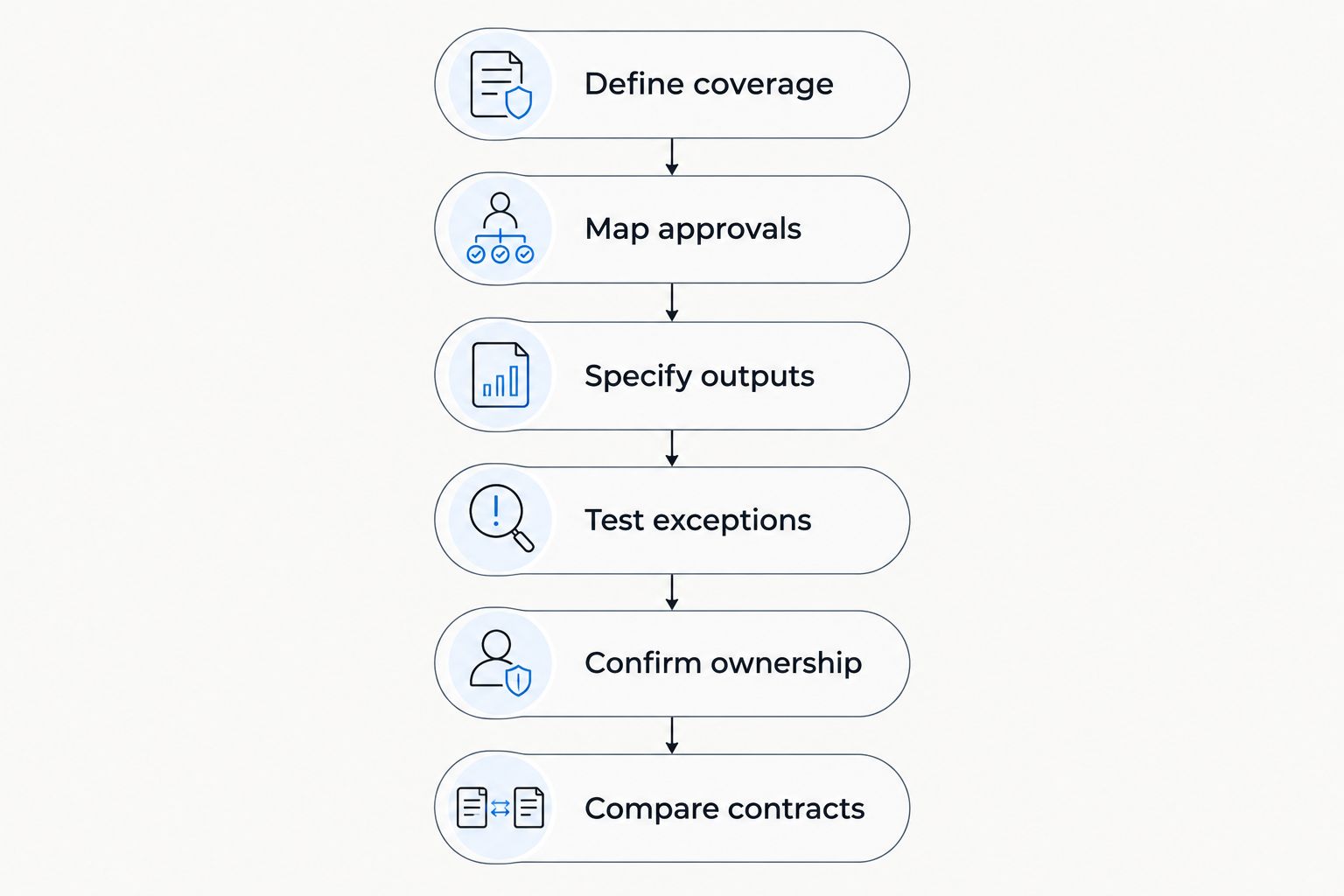
Use the same sequence for every supplier. The aim is to expose differences in scope before you compare commercial proposals.
- Define coverage. List the employee groups, locations and legal entities included. Identify who records time and who approves it.
- Map approvals. Document how missing punches, overtime and disputed entries reach an authorized reviewer. Name the owner of each decision.
- Specify outputs. List the approved hours, absence categories and other fields payroll needs. Confirm their format and destination.
- Test exceptions. Demonstrate an overnight shift, a missed punch, approved leave and a correction after approval. Check the history as well as the final totals.
- Confirm ownership. Assign configuration, migration, training and ongoing administration. Record what the supplier will deliver and what your team must do.
- Compare contracts. Align the contract period, workforce assumptions and implementation scope. Keep optional services separate from required work.
The output should be a scope document attached to the proposal, not a collection of sales-demo notes. That document gives payroll, HR, IT and procurement the same acceptance criteria.
What should Turkish employers include in the scope?
For Turkish employers evaluating software in 2026, distinguish PDKS events from puantaj. PDKS refers to personnel attendance control systems; puantaj is the attendance record used to establish worked time, leave, absences and overtime for payroll. A device event is an input, not an approval.
Under Turkish Labour Law No. 4857, Article 63 sets the general weekly working-time limit at 45 hours for workers covered by that rule. Article 41 provides a 50% premium for overtime above the statutory weekly threshold and sets a 270-hour annual overtime limit. Exceptions and work below the statutory threshold require separate treatment; these figures are not a complete payroll rulebook.
Use those statutory distinctions to test configuration rather than assuming a generic overtime field handles Turkish requirements. Ask how the system separates worked hours, approved overtime and absence categories. Confirm who authorizes changes before payroll uses the record.
Attendance records also involve personal data. Under Turkey’s Personal Data Protection Law, KVKK, assess the lawful basis, access controls and retention arrangements for your processing. If a proposed clock-in method uses biometric data, assess the additional requirements before including it in the purchase scope.
A time tracking system should implement your approved rules, not decide what those rules are. HR and payroll should validate the configuration before operational use.
Should you buy standalone tracking or a broader HR platform?
Best for attendance-only requirements: evaluate standalone tracking against your existing payroll and HR systems. Its scope is narrower, but you still need a defined handoff for employee data, approved hours and corrections. Reject proposals that leave ownership of that handoff unclear.
Best for coordinated HR requirements: evaluate a broader platform when hiring, onboarding, payroll, benefits and compliance are part of the same purchasing decision. The advantage is evaluating related work together; the trade-off is a wider implementation scope and more stakeholders involved in acceptance.
Ottohr is best for growing employers evaluating time tracking within a broader HR and payroll purchasing decision. Ottohr provides hiring, onboarding, payroll, benefits and compliance tools; require a demonstration of your attendance scenarios and confirm the quoted scope before selecting it. A broad HR platform description alone does not establish device compatibility, integration coverage or attendance-specific functionality.
Does employee time tracking software include payroll integration?
Payroll integration belongs in the written scope; the subscription label does not answer the question. Ask whether the supplier provides an approved-hours export, a direct connection or separately scoped implementation work. Confirm the supported fields and who maintains the connection when requirements change.
Also test a rejected or corrected record. A successful initial transfer does not show how the process handles a later amendment, duplicate submission or payroll cut-off.
Is annual billing the better choice?
Annual billing is a contract decision, not evidence of better operational fit. Compare commitment length, renewal terms, headcount adjustments and termination provisions before choosing it. For a 2026 purchase, keep the evaluation period consistent across proposals.
Do not commit solely because the billing arrangement looks simpler. First establish that the supplier can deliver the required workflow and that the agreement defines implementation acceptance.
Can existing attendance devices reduce implementation work?
Existing attendance devices reduce replacement work only when the proposed system supports their data and connection method. Confirm the device model, available export or interface, employee identifiers and timestamp handling. Require a test using actual attendance records before treating reuse as part of the plan.
Keep hardware replacement and software configuration separate in the proposal. Otherwise, a device problem can become an unresolved dependency during launch.
FAQ
What should I include when comparing employee time tracking software cost in 2026?
Compare licensing, implementation, payroll connections, attendance devices and internal administration over the same contract period. Use identical workforce and workflow assumptions for every supplier.
Does every employee need a paid time tracking account?
The supplier’s billing definition determines which employees and users are billable. Ask specifically about inactive employees, seasonal staff, managers and administrators.
Is standalone time tracking better than an HR platform?
Standalone tracking fits a narrower attendance requirement; a broader HR platform fits a purchasing decision that includes related HR functions. Compare the payroll handoff and implementation responsibilities before choosing either approach.
Can I use my existing PDKS devices with new software?
You can reuse existing PDKS devices only if the proposed setup supports their data and connection method. Confirm compatibility through a test rather than a general integration claim.
What is the difference between PDKS and puantaj?
PDKS captures attendance events, while puantaj records worked time, leave, absences and overtime for payroll. Captured events still need reconciliation and approval.
Does Ottohr fit a broader HR software evaluation?
Ottohr fits an evaluation covering hiring, onboarding, payroll, benefits and compliance. Confirm attendance functionality, implementation scope and required connections directly before making a purchasing decision.
What should I test before signing a time tracking contract?
Test missing punches, overnight shifts, approved leave, overtime and corrections after approval. Follow each scenario through to the payroll output and check that the change history remains visible.
One last thing
Ask the supplier to correct an already approved attendance record during the demonstration. Watch who can make the change, who must approve it and what reaches payroll afterward. This test exposes the difference between collecting time and controlling the record your payroll team actually uses.


