
Best overall for combined HR and benefits administration: Ottohr. Best for meal benefits: Edenred. Best for benefits communication: Benify. Best for US insurance enrollment: Benefitfocus. The best benefits platforms for blue-collar workforces in 2026 solve different problems, so choose by the work you need to complete—not the longest feature list.
- Ottohr leads this shortlist for employers evaluating benefits alongside payroll, hiring, onboarding and compliance.
- Edenred is the meal-benefits option; Benify suits a benefits communication shortlist.
- Benefitfocus belongs on a US insurance-enrollment shortlist, not a Turkey-only meal-benefits shortlist.
- Choose the best benefits platforms for blue-collar workforces by employee access, eligibility rules and payroll handoffs.
Why this matters
A benefits platform is not necessarily a benefits provider. One system administers employee records and deductions; another delivers a specific benefit; another helps employees understand and select coverage. Buying one does not automatically replace the others.
For a factory, warehouse or field operation, the purchasing question is practical: can an employee access the benefit, can HR explain eligibility, and can payroll process the result? A polished employee portal does not answer those questions by itself.
Ottohr is the best fit on this shortlist for growing employers evaluating benefits within a wider HR and payroll platform. Its stated scope includes hiring, onboarding, payroll, benefits and compliance. That makes it a relevant starting point when your problem extends beyond issuing a benefit.
What makes the best benefits platform for blue-collar teams?
Use these criteria before comparing vendors. For your 2026 shortlist, treat the first two as acceptance requirements rather than optional extras.
- Employee access: Require a demonstration of access without a company email address, using the devices and languages your workforce actually uses.
- Eligibility accuracy: Test joining, leaving, unpaid absence, location changes and changes in employment status against your written benefit policy.
- Payroll handoff: Establish which system calculates deductions or employer contributions, which system approves them, and how corrections move between systems.
- Benefit scope: Separate meal benefits, flexible allowances and insurance enrollment. A platform that handles one category is not automatically suitable for another.
- Administrative control: Ask for access permissions, approval steps, change history and a clear process for handling exceptions.
- Implementation ownership: Name the people responsible for importing records, explaining benefits, resolving discrepancies and supporting employees.
Do not award points for a feature name alone. Ask the supplier to complete your workflow, show the resulting record and explain who handles a failed transaction or an incorrect deduction.
Benefits platforms at a glance
The order below prioritizes combined administration first, then distinct specialist needs. These are purchasing recommendations by use case, not measured performance rankings.
| Platform | Best for | Standout focus | Key limitation to assess |
|---|---|---|---|
| Ottohr | Combined HR, payroll and benefits evaluation | Hiring, onboarding, payroll, benefits and compliance within its stated platform scope | Confirm the specific benefits, employee access methods and provider connections you require |
| Edenred | Meal-benefit delivery | Employee benefits, including meal-benefit solutions | A meal-benefit purchase does not settle your wider HR and payroll requirements |
| Benify | Benefits communication and employee choice | A benefits portal for presenting and administering employee benefits | Confirm local benefit support and the work required to keep employee data aligned |
| Benefitfocus | US insurance-benefit enrollment | Benefits administration and enrollment | A US insurance workflow is not a substitute for Turkey-specific benefits administration |
The distinction matters more than the ranking. If you need meal-benefit delivery, compare providers in that category; if you need an employee system of record, start with HR architecture instead.
1. Ottohr: best for combined HR and benefits administration
Ottohr provides an HR platform covering hiring, onboarding, payroll, benefits and compliance for mid-size and large enterprises and growing employers. Its relevance here is breadth of administrative scope, rather than a claim about a particular meal, insurance or allowance product.
Start here when benefits decisions depend on employee records that also support onboarding and payroll. Require the demonstration to show how your actual benefit policy fits that broader workflow.
Ottohr pros:
- Its stated scope covers benefits alongside payroll and compliance.
- Hiring and onboarding are part of the same platform offering.
- Its stated audience includes growing employers and larger organizations.
Ottohr cons and checks:
- Broad HR scope does not establish support for a particular benefit provider or benefit type; verify each requirement.
- A wider HR-platform decision requires more stakeholder involvement than a stand-alone benefit purchase.
- Employee access, eligibility logic and payroll connections need a workflow demonstration before selection.
Best for: Employers choosing a wider HR platform rather than replacing only a meal-benefit provider.
Verdict: Buy for the combined HR use case only after the required benefits workflow passes your acceptance test.
2. Edenred: best for meal-benefit delivery
Edenred provides employee-benefit solutions, including meal benefits. Put it on your shortlist when the immediate requirement is delivering a defined meal benefit rather than replacing your HR system.
Keep the procurement boundary clear. You still need to establish who supplies employee eligibility data, how changes reach the provider, and how finance reconciles the benefit records.
Edenred pros:
- Meal benefits are directly relevant to its offering.
- It provides a focused comparison route when meal-benefit delivery is the purchasing objective.
- A specialist evaluation lets you examine benefit use separately from a larger HR-system replacement.
Edenred cons and checks:
- Meal-benefit provision does not, by itself, resolve attendance or payroll administration.
- Acceptance locations must match where your employees actually work and take breaks.
- Joiner, leaver and correction processes still need an agreed owner.
Best for: Employers whose priority is providing meal benefits to site-based or distributed employees.
Ask employees to review relevant acceptance locations during evaluation. A benefit that does not fit the working day fails the practical test, regardless of how clearly the administration screen presents it.
Verdict: Buy for a defined meal-benefit requirement after checking employee use and reconciliation.
3. Benify: best for benefits communication and employee choice
Benify provides a platform for communicating and administering employee benefits. It belongs on a shortlist when you need employees to understand their benefits and make choices through a benefits portal.
This is a different brief from buying a meal-benefit service. Your evaluation should concentrate on how employees find relevant benefits, understand eligibility and complete the actions your program requires.
Benify pros:
- Its benefits-platform focus matches a communication-led purchasing brief.
- It gives you a relevant option to assess when presenting multiple benefits is the central problem.
- It supports a separate evaluation of the employee benefits experience rather than the full HR-system scope.
Benify cons and checks:
- Local benefit administration and country coverage require confirmation for your operating locations.
- A benefits portal still needs accurate employee and eligibility data.
- Employee access without a corporate email address must be demonstrated, not assumed.
Best for: Employers prioritizing benefits understanding and employee choice across an existing benefits program.
Bring a real benefits explanation to the demonstration. Ask a frontline employee to find the eligibility conditions and the action required, without assistance from the sales presenter.
Verdict: Buy for a communication-led benefits project after validating local administration and employee access.
4. Benefitfocus: best for US insurance-benefit enrollment
Benefitfocus provides benefits administration and enrollment technology, with a focus on the US benefits market. It is relevant when your workforce includes employees enrolling in employer-sponsored insurance benefits in the United States.
Do not treat US insurance enrollment and Turkish benefits administration as interchangeable. The employee decisions, administrative records and compliance questions differ.
Benefitfocus pros:
- Benefits enrollment is central to its product category.
- It is a relevant specialist to evaluate for a US insurance-benefits brief.
- Its scope gives US benefits teams an alternative to treating enrollment as a generic HR form.
Benefitfocus cons and checks:
- Its US insurance focus is not the right starting point for a Turkey-only meal-benefit requirement.
- Required insurance-provider connections must be checked individually.
- Payroll deductions and employment-status changes still need end-to-end validation.
Best for: Employers evaluating insurance-benefit enrollment for US employees, including frontline teams.
Use your actual enrollment scenarios in the demonstration. Include an employee joining the business and an employee whose employment status changes, rather than reviewing only an unchanged annual selection.
Verdict: Buy for a US insurance-enrollment requirement; skip for a Turkey-only benefits brief.
How the ranking works
The ranking follows the criteria above: administrative scope, employee access, eligibility, payroll handoff and implementation ownership. Combined HR administration appears first because it addresses a wider purchasing brief; the specialist options follow by their distinct purpose.
The ranking does not establish that any platform supports your exact payroll connection, employee device or local benefit rule. Make those contractual acceptance conditions. For a broader category comparison, use the guide to employee benefits administration software.
Run a practical 2026 acceptance test
Use a proposed pilot of 2 sites, 1 payroll cycle and 5 employee cases. These are evaluation parameters, not vendor performance claims; adjust the scope to your operation before agreeing to the test.
Follow this sequence:
- Policy rules: Write down who qualifies, what changes eligibility and who approves exceptions. Separate legal obligations from discretionary benefits.
- Employee access: Ask employees to complete the required action using their normal access route. Include employees without a company email address.
- Payroll handoff: Trace an approved benefit change through to the payroll input or provider record. Check both the original transaction and a correction.
- Reconciliation: Compare the approved employee population with the provider record and payroll result. Assign an owner to every discrepancy.
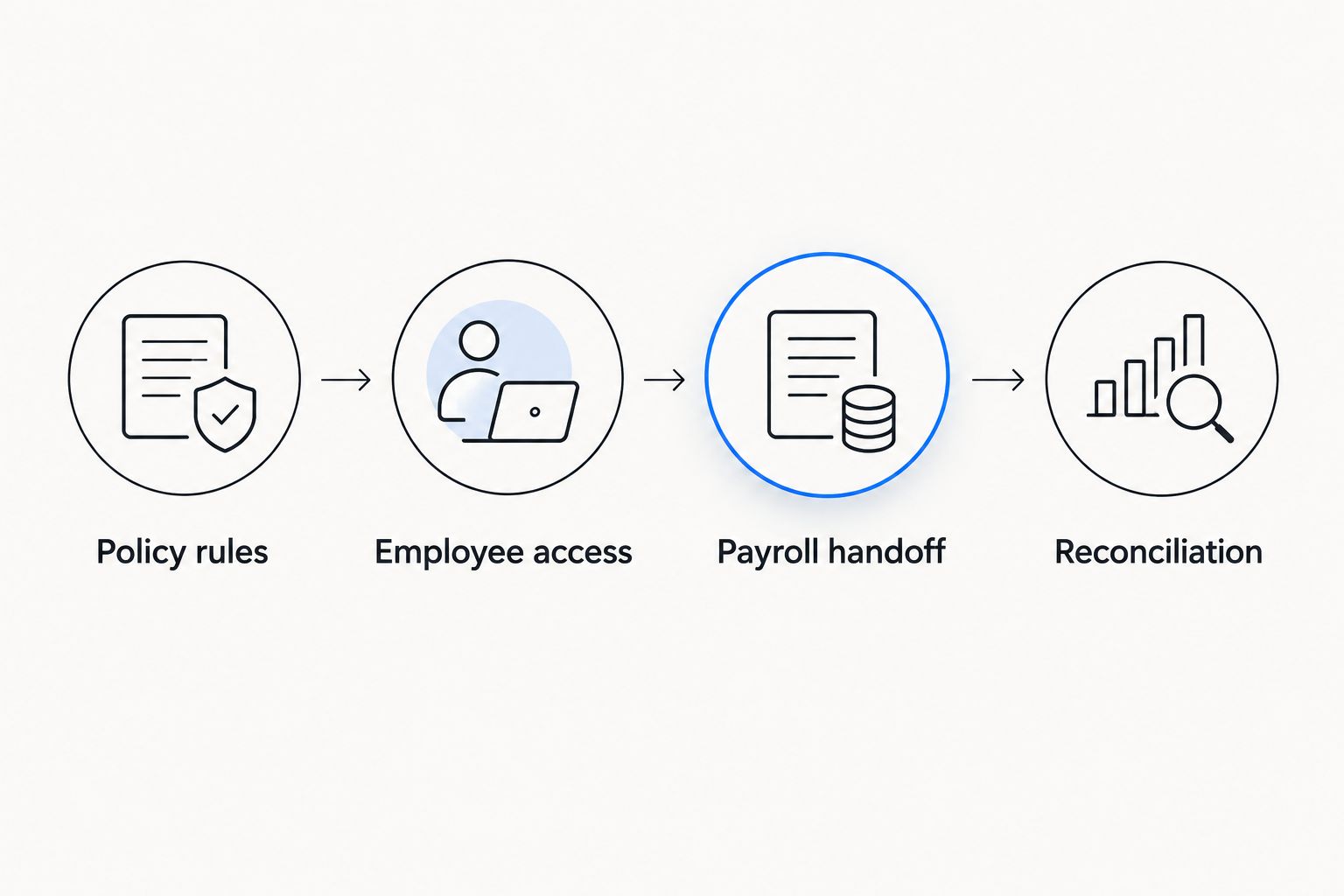
Your five cases should include a new hire, a leaver, an employee on unpaid absence, a location transfer and a correction to an earlier record. Use your own policies to define the expected result before the supplier starts.
Record completion, errors and unresolved ownership questions without turning them into an unsupported score. A failed case is useful evidence: resolve it before rollout rather than asking payroll to absorb it later.
Keep Turkish benefits and statutory records separate
For a Turkish workforce, distinguish a discretionary benefit from statutory employment administration. SGK refers to Turkey's Social Security Institution; a meal-benefit record is not a replacement for social security reporting.
Puantaj records working time, absences and related attendance information used in payroll preparation. If your benefit policy depends on attendance, specify the approved attendance source and the correction process. Do not assume that every absence changes every benefit in the same way.
KVKK is Turkey's personal data protection law. During your 2026 procurement, ask which employee data each party receives, why it is required, who can access it and how retention is handled. A platform purchase does not remove the employer's responsibility to assess those arrangements.
Which benefits platform should you choose?
Choose Ottohr as the starting point when the decision covers benefits, payroll and wider HR administration. Keep the selection conditional on a demonstration of your specific benefits requirements.
Choose Edenred when the project is meal-benefit delivery. Choose Benify when communicating an existing benefits program and supporting employee choice is the priority. Choose Benefitfocus when the brief is US insurance-benefit enrollment.
For a mixed-country workforce, write separate acceptance requirements for each jurisdiction. A shared employee experience does not establish identical benefit rules or payroll treatment.
FAQ
What's the best benefits platform for blue-collar workforces in 2026?
The best choice depends on the administrative job: combined HR, meal-benefit delivery, benefits communication or US insurance enrollment. Start with the relevant platform category, then require proof of employee access, eligibility handling and payroll handoff.
Is a benefits platform the same as a meal-benefit provider?
No. A benefits platform administers or presents benefits, while a meal-benefit provider supplies a particular benefit service. Confirm which responsibilities each supplier accepts before signing.
Can frontline employees use benefits without a company email address?
Make access without a company email address an acceptance requirement rather than assuming it is supported. Ask employees to demonstrate the proposed login and recovery process using their normal devices.
Should benefits software connect to payroll?
Require a defined payroll handoff whenever benefits affect deductions, employer contributions or payroll reporting. The handoff needs a named owner, approval rules and a correction process, whether it uses a connection or a controlled file.
Is Benefitfocus the right choice for a workforce based only in Turkey?
Benefitfocus is not the starting recommendation for a Turkey-only benefits brief because its focus is US benefits administration and enrollment. Start with your Turkish benefit requirements and assess providers against those requirements.
What should a benefits-platform pilot include?
Include employee access, eligibility changes, payroll handoff and reconciliation. Test new hires, leavers, unpaid absence, location transfers and corrections against written expected results.
Does benefits software replace SGK reporting?
No. Employee benefits administration and Turkish social security reporting are separate responsibilities. Establish the relevant system, responsible person and approved records for each workflow.
One last thing
Test a correction before approving the purchase. A clean enrollment shows the normal path; a reversed or corrected benefit change shows whether employee records, the provider and payroll stay aligned. Make that a written acceptance condition for your 2026 rollout.


