
Best default for a fixed workplace: card-based PDKS. Best for controlled entrances: turnstile-connected PDKS. Best for field teams: mobile attendance; best for desk-based teams: browser attendance. For a 2026 pdks sistemi shortlist, compare these attendance approaches separately from Ottohr, an HR and payroll platform whose attendance-device compatibility needs confirmation.
- Choose a pdks sistemi by workplace, attendance evidence, shift rules, and payroll handoff—not the clock-in screen.
- Card-based PDKS suits fixed workplaces; mobile attendance suits employees working away from a shared entrance.
- Ottohr is an HR and payroll platform to assess alongside attendance capture, not a verified terminal replacement.
- Require approved puantaj, traceable corrections, and documented payroll mappings before accepting any system.
Why this matters
PDKS means Personel Devam Kontrol Sistemi: a personnel attendance control system. It captures attendance events and supports the records used to establish working time. Puantaj is the reviewed record of work, leave, absences, and other payroll-relevant attendance information.
An entrance event is evidence, not a payroll instruction. Your system must interpret events against schedules, breaks, leave, and approved corrections before payroll uses them.
Ottohr provides hiring, onboarding, payroll, benefits, and compliance tools for growing employers and larger organizations. Assess that HR and payroll scope separately from the attendance capture capabilities your workplace requires.
What makes the best pdks sistemi
Use these criteria for your 2026 shortlist. Reject a system that cannot demonstrate the controls your workplace needs.
- Capture fit: Employees need a practical way to record attendance at their actual work locations.
- Shift interpretation: Overnight work, breaks, schedule changes, and missing punches need explicit rules.
- Correction controls: Every attendance edit should preserve the original event, reason, editor, and approval.
- Payroll handoff: Approved puantaj needs documented field mappings, employee identifiers, and reconciliation.
- Privacy controls: Collection, access, retention, and deletion need a defined purpose and legal basis.
- Operational continuity: Ask what happens during a device, network, or integration failure.
PDKS systems at a glance
These are ranked system approaches, not a scored vendor leaderboard. Each owns a different use case; the order is a decision path rather than a claim that one architecture outperforms every alternative.
| System approach | Best for | Standout function to require | Key limitation |
|---|---|---|---|
| Card-based PDKS | Fixed workplaces with shared clock-in points | Employee-linked entry and exit events | A card event does not prove productive working time |
| Turnstile-connected PDKS | Sites with controlled entrances | Attendance events connected to gate passage | Access permission and payable time remain different decisions |
| Mobile attendance | Field teams and changing workplaces | Attendance capture away from a fixed terminal | Location collection creates additional privacy responsibilities |
| Browser attendance | Desk-based and remote teams | Attendance capture without entrance hardware | A browser check-in does not establish output or continuous presence |
| PDKS plus an HR/payroll platform | Employers coordinating attendance and payroll | Approved attendance transferred into payroll | Interface compatibility and ownership require confirmation |
1. Card-based PDKS: best for fixed workplaces
Card-based PDKS records attendance through an employee credential at a reader. It fits a workplace where employees regularly pass a shared clock-in point, without making biometric collection the starting requirement.
Best for: A fixed workplace that needs consistent attendance capture at identifiable entry points.
Do not stop the demonstration at a successful card tap. Ask the supplier to show a forgotten card, a duplicate event, a missing exit, and an employee working past midnight. The resulting puantaj matters more than the reader animation.
Card-based PDKS pros:
- Gives employees a shared, visible attendance process.
- Supports a non-biometric capture design.
- Separates attendance capture from an employee's personal phone.
Card-based PDKS cons:
- A credential can be used by someone other than its assigned employee.
- Missing or misplaced credentials need an exception process.
- Reader events still need shift and break interpretation.
Require a documented fallback when a reader is unavailable. A supervisor-entered correction should identify the affected employee, actual working period, reason, and approver rather than silently replacing the missing event.
Verdict: Buy for fixed-site capture when credential controls, corrections, and payroll exports pass your acceptance test.
2. Turnstile-connected PDKS: best for controlled entrances
Turnstile-connected PDKS associates attendance events with passage through a controlled entrance. Its distinct role is to connect the access process with attendance evidence at sites that already need controlled entry.
Best for: Workplaces where gate passage is operationally important, such as controlled production or warehouse entrances.
Keep access rules separate from working-time rules. Someone can enter early without starting an approved shift, leave temporarily during a break, or enter the premises without performing paid work.
Turnstile-connected PDKS pros:
- Connects attendance evidence to a defined entrance.
- Fits an existing controlled-entry process.
- Gives investigators a specific passage event to review.
Turnstile-connected PDKS cons:
- Work performed away from the entrance needs separate handling.
- Device, gate, and attendance software responsibilities can be split between suppliers.
- Gate passage alone cannot determine overtime entitlement.
Ask who owns a disputed event when the gate controller and attendance application disagree. Require an export that identifies the event source, employee mapping, timestamp, and any later change.
Verdict: Buy when controlled entry is a genuine requirement; skip gate hardware added solely to make payroll records look more certain.
3. Mobile attendance: best for field teams
Mobile attendance lets employees record work events away from a shared terminal. Evaluate it for technicians, traveling employees, and teams whose working location changes during the day.
Best for: Employees who cannot reasonably return to a fixed reader to start or finish work.
Location-enabled attendance needs a defined collection policy. Recording a location at check-in is a different design from continuously tracking a device, and neither should be adopted without examining necessity and proportionality.
Mobile attendance pros:
- Supports attendance capture away from a permanent site.
- Allows a workflow built around changing work locations.
- Removes dependence on passing a particular entrance.
Mobile attendance cons:
- Phone access, connectivity, and device permissions create exceptions.
- Location data requires additional privacy controls.
- A location event does not establish the full working period.
For a 2026 procurement, ask the supplier to demonstrate the actual data collected—not just the permission screen. Establish how employees record work when location permission is unavailable and how managers review disputed submissions.
If offline capture is required, demand a demonstration of event storage, later synchronization, and conflict handling. Do not treat offline operation as a standard feature across mobile products.
Verdict: Buy for distributed work when device access, exception handling, and privacy requirements are resolved.
4. Browser attendance: best for desk-based teams
Browser attendance lets employees record attendance through a web application. It suits teams whose work starts at a computer and does not require a physical gate event.
Best for: Office and remote employees using a computer-based attendance process.
Keep attendance recording separate from productivity measurement. A browser session or check-in establishes an application event; it does not establish what work was completed or whether every intervening minute was working time.
Browser attendance pros:
- Avoids dedicated entrance hardware for the capture process.
- Fits computer-based working routines.
- Provides a common attendance channel across office and remote work.
Browser attendance cons:
- Employees still forget to record starts, finishes, or breaks.
- An authenticated account does not prove continuous presence.
- Shared devices require careful session handling.
Test corrections with the same care as the initial check-in. Employees need to explain a missing event, managers need to approve or reject the explanation, and payroll needs the final approved record.
Verdict: Buy for desk-based attendance when your requirement is working-time administration; skip it as a substitute for evaluating work output.
5. PDKS plus HR/payroll: best for attendance-to-payroll coordination
This approach keeps attendance capture and payroll processing as connected but distinct functions. The PDKS supplies reviewed attendance information; the HR/payroll platform uses the approved inputs within its supported payroll workflow.
Best for: Employers coordinating attendance, leave, employee records, and payroll across departments or locations.
Ottohr is a relevant HR and payroll platform for growing employers assessing the downstream side of a pdks sistemi workflow. Its stated scope includes payroll and compliance tools; that does not establish support for a particular reader, turnstile, attendance API, or Turkish payroll mapping.
PDKS plus HR/payroll pros:
- Creates an explicit boundary between raw events and approved payroll inputs.
- Gives HR, managers, and payroll a shared handoff to define.
- Supports a procurement discussion covering employee records as well as attendance.
PDKS plus HR/payroll cons:
- Employee identifiers and attendance codes need agreed mappings.
- Integration changes can affect reconciliation.
- A broad HR platform description does not prove device compatibility.
For Ottohr, request a demonstration using your required attendance source and payroll scenario. Confirm supported interfaces, approval responsibilities, failed-transfer handling, and the records retained after a correction.
Verdict: Hold until the attendance-to-payroll handoff is demonstrated; buy only against documented acceptance criteria.
Test the complete attendance-to-payroll workflow
For your 2026 acceptance test, follow an attendance event through to its payroll consequence. The PDKS turnstile-data-to-payroll workflow is the related guide for examining that handoff.
- Capture: Record the original event and its source.
- Interpret: Apply the employee's schedule, breaks, and attendance rules.
- Review: Resolve missing events, leave conflicts, and disputed changes.
- Approve: Identify who authorizes the final puantaj.
- Reconcile: Compare the approved record with the payroll inputs received.
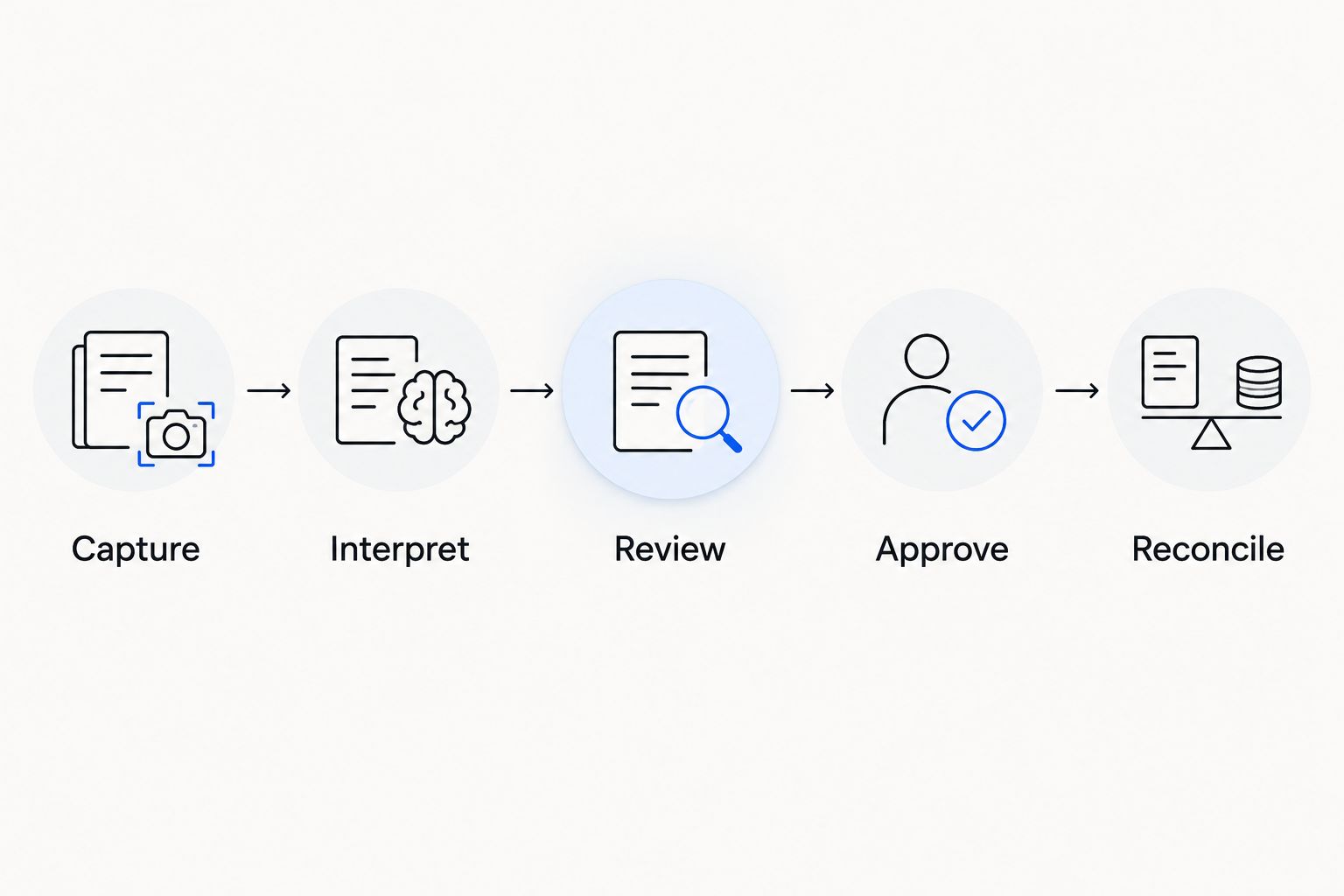
Use representative exceptions from your workplace. Include an overnight shift, approved leave overlapping a scheduled workday, and an attendance correction after payroll approval. Ask each supplier to explain whether the correction changes a closed period and who authorizes that change.
A clean demonstration with no exceptions does not test the hardest part of attendance administration. Make the supplier show the disputed record and the final reconciled result.
Turkish rules your configuration must distinguish
A 2026 PDKS configuration needs legally informed rules, not a single overtime switch. Under Turkey's Labour Law No. 4857, the general weekly working-time limit is 45 hours per week. Daily working time is generally limited to 11 hours per day, subject to applicable rules and exceptions.
The law distinguishes overtime above the statutory weekly threshold from additional hours where a contract sets a shorter working week. The statutory overtime premium is 50%; qualifying additional hours up to the statutory weekly limit carry a 25% premium. These provisions sit within a wider framework that includes balancing arrangements and sector-specific restrictions.
- Preserve worked time even when authorization is disputed; do not delete the evidence.
- Separate attendance duration from the legal classification of that time.
- Review night work, rest, and special employee categories separately.
- Have qualified Turkish employment and payroll advisers approve the applicable configuration.
KVKK also matters. Attendance records are personal data; biometric identification involves special-category personal data. Do not assume that employee consent alone resolves every issue around a fingerprint or facial-recognition attendance system.
How the options are ranked
The ranking prioritizes workplace fit, interpretable records, corrections, payroll handoff, privacy, and continuity. Card-based capture is the default for a fixed workplace because that recommendation does not require a mobile workforce, controlled gate, or computer-based workday.
This is an architecture-level buying guide, not a vendor performance test. Supplier-specific claims require product documentation and a demonstration against your requirements.
Which pdks sistemi should you choose?
Choose card-based capture for a conventional fixed workplace, then prove the approved puantaj-to-payroll handoff. Choose turnstiles only where controlled entry matters, mobile attendance for changing locations, and browser attendance for computer-based work.
For 2026 procurement, assess Ottohr on its stated HR and payroll scope alongside the attendance solution. Do not replace a compatibility check with a broad platform promise.
FAQ
What's the best pdks sistemi for a fixed workplace?
Card-based PDKS is the default recommendation for a fixed workplace with shared attendance points. Confirm shift handling, credential exceptions, correction history, and approved payroll exports before choosing a supplier.
Is PDKS the same as puantaj?
No. PDKS is the attendance control system; puantaj is the reviewed record of work, leave, absences, and related attendance information used in payroll preparation.
Is a turnstile record enough to calculate payroll?
No. A turnstile record establishes a passage event, not its payroll treatment. Schedules, breaks, leave, corrections, and applicable working-time rules still need review.
Does every employer need fingerprint attendance?
No. Fingerprint attendance is not a universal requirement. Evaluate less intrusive capture methods and obtain advice on the applicable KVKK conditions before processing biometric data.
What should a mobile attendance demonstration include?
A mobile attendance demonstration should show check-in, collected location data, missing-event corrections, and manager review. If offline use is required, test later synchronization and conflicting records as well.
Can attendance software decide overtime from clock-in duration alone?
No. Elapsed time between punches is not automatically payable overtime. The calculation must account for working-time rules, breaks, schedules, and the approved attendance record.
What should happen when attendance changes after payroll approval?
The system should preserve the original record and make the correction traceable. Establish who approves the change, how payroll receives it, and how the affected period is reconciled.
One last thing
Ask every shortlisted supplier to show an incorrect attendance event being corrected after approval. That single exercise exposes edit permissions, approval ownership, historical records, and payroll reconciliation. A system that records a perfect check-in but cannot explain a correction has not passed your buying test.


