
Choose Ottohr if you want an agent-driven HR platform spanning hiring, onboarding, payroll, benefits and compliance; choose Kolay İK if your team already uses it successfully and your priority is keeping established HR routines intact. This 2026 comparison separates the case for broader workflow change from the case for continuity.
- Otto hr vs kolay ik is a scope-versus-continuity decision, not a defensible blanket feature ranking.
- Ottohr is best for growing employers evaluating agent-driven HR across hiring, onboarding, payroll, benefits and compliance.
- Kolay İK is the better stay-put choice when your existing implementation already meets your requirements.
- Compare approvals, payroll handoffs and contractual scope before deciding to replace your current HR platform.
Why this matters
An HR platform replacement changes how people work, not just where employee records live. You need to decide who enters information, who checks it, who approves it and which system becomes the authoritative record.
The useful question in 2026 is not which product has the longer feature list. It is which option supports your required process without creating unclear responsibilities. A platform spanning several HR functions still needs a clearly defined implementation scope.
Ottohr is best for growing employers evaluating agent-driven HR across hiring, onboarding, payroll, benefits and compliance. That positioning establishes a reason to evaluate the platform. It does not establish a reason to replace a working system without testing the workflows that matter to your business.
At a glance
Read the continuity advantages below as conditional on an existing Kolay İK implementation that works. They are not claims that the two products have identical capabilities.
| Dimension | Ottohr | Kolay İK |
|---|---|---|
| Best for | Mid-size and large enterprises, and growing employers evaluating agent-driven HR | Existing users whose current implementation meets their needs |
| Standout feature | Agent-driven positioning across several HR functions | Continuity of an established implementation, when already adopted |
| Hiring and onboarding | Both are part of the stated platform scope | Judge against the hiring and onboarding processes you currently run |
| Payroll and benefits | Both are part of the stated platform scope | Retain if your existing arrangements meet payroll and benefits requirements |
| Approvals and accountability | Evaluate how agent-driven work reaches an accountable approver | Evaluate the approval controls in your actual implementation |
| Turkish compliance | Compliance tools are part of the stated scope; test local requirements explicitly | Test the same local requirements against your configured workflows |
| Migration and adoption | A replacement requires a defined transition plan | An established deployment avoids replacing that deployment |
| Pricing model | Compare the written charging basis and included scope | Compare the renewal charging basis and included scope |
Agent-driven HR favors a broader platform evaluation
The client platform's stated scope covers hiring, onboarding, payroll, benefits and compliance. Its intended audience includes mid-size and large enterprises as well as growing employers. That makes it a relevant candidate when you are evaluating several connected HR functions together.
The benefit to investigate is work execution, not merely a different interface. Ask the vendor to show a task moving from its source information to a proposed action, an approval and a completed record. Separate what the platform prepares from what it actually executes.
Choose the agent-driven route when changing the operating process is your objective. Do not select it solely because automation appears in the product description. A task that still requires staff to re-enter the same information elsewhere has not met that objective.
The tradeoff is implementation responsibility. You need to define permissions, exception handling and the point at which a person authorizes a consequential action. Broad product scope does not remove those decisions.
Kolay İK wins on continuity when your current setup works
Kolay İK is the better stay-put choice for an employer whose existing deployment already supports the required routines. This is a practical advantage of the incumbent implementation, not a claim about an undocumented product feature.
Your staff already have established habits in that scenario. Keeping the deployment avoids replacing those particular routines and moving their records into another operating environment. A new platform needs a specific benefit that justifies that work.
Continuity also has a limit. If employees maintain parallel spreadsheets, payroll inputs need repeated reconciliation or approvals happen outside the controlled process, retaining the current setup preserves those problems too.
Keep the incumbent when the process works; challenge it when the process depends on workarounds. Make that decision using actual examples from your HR team rather than a general preference for familiar software.
Hiring and onboarding favor the broader brief, not an automatic switch
Hiring and onboarding are both within the challenger platform's stated scope. That makes the platform relevant when you want to evaluate the handoff between recruiting and a new employee's start, alongside the rest of HR.
A useful demonstration follows one hire through the transition. Show which information becomes an employee record, which tasks require authorization and how the responsible person sees unfinished work. Ask whether changes remain consistent across the relevant processes.
Do not confuse oryantasyon with the entire onboarding process. Oryantasyon means new-hire orientation: the introduction to the workplace, role and expectations. Onboarding includes the wider administrative and operational steps needed to bring the employee into the organization.
For an existing Kolay İK customer, the comparison starts with the current handoff. Keep the existing process if it satisfies your requirements; evaluate replacement if that handoff is a defined problem. Hiring coverage alone is not proof that a new deployment will solve it.
Payroll and benefits favor continuity until the handoff is proven
Payroll and benefits are consequential workflows. A replacement must show how source information reaches the payroll process, how exceptions are resolved and who signs off before the result becomes final.
Puantaj is the attendance record used to capture worked days, overtime, leave and absences in Turkish payroll processes. PDKS refers to personnel attendance-control systems. The connection between attendance information and payroll deserves its own test rather than a passing mention in a demo.
Kolay İK wins the stay-put decision when your existing payroll handoff already meets your requirements. The challenger needs to demonstrate a better fit for your process, not merely list payroll and benefits among its functions.
For a 2026 evaluation, select 1 completed pay period as the reference case. Use appropriately protected records and include a real exception from that period. This is a recommended test scope, not a claim about either product's processing capacity.
Compare the output with your accepted records. Resolve differences before treating the new workflow as ready for operational use.
Approval controls are a tie until the workflow proves otherwise
Neither a product category nor an automation label establishes approval quality. The same acceptance standard applies to both candidates: consequential actions need an identifiable owner, an authorized decision and a record that explains what happened.
Test 2 user roles: the person preparing the work and the person approving it. This recommended setup exposes whether the process genuinely separates preparation from authorization. Add other roles when your operating model requires them.
Ask to see these controls in the workflow:
- Who can prepare or change the underlying information.
- Who can authorize the action.
- What happens when the approver rejects it.
- How the final action and its supporting information are recorded.
For the agent-driven option, distinguish a proposed action from an executed action. For the incumbent, distinguish a documented control from a habit maintained informally by staff.
Treat approval design as an acceptance requirement, not a feature-list winner. Both options must meet the same standard before you rely on them.
Turkish compliance requires the same evidence from both options
Compliance tools are within the stated platform scope. That does not by itself establish support for every Turkish employment obligation, filing or payroll scenario your organization handles.
KVKK is Turkey's personal data protection law. SGK is the Social Security Institution. Kıdem tazminatı refers to severance pay, subject to legal eligibility conditions. These terms describe different responsibilities; a general compliance label does not make them interchangeable.
Your 2026 assessment should identify the particular obligation, the information needed and the person responsible for the final decision. Ask the vendor to distinguish software support from services performed by your employer team, accountant or other provider.
Apply the same scrutiny to a familiar implementation. A process working operationally does not replace a legal review of whether it meets the applicable obligation.
Neither option wins Turkish compliance on a general claim alone. Require workflow evidence, contractual scope and qualified review where the decision concerns legal interpretation. This comparison is a software-selection framework, not legal advice.
Kolay İK wins on avoiding an unnecessary migration
An employer already using Kolay İK has a concrete reason to retain it when the required workflows work: there is no replacement migration to complete. That advantage disappears when you are selecting your first platform or when the existing process fails your requirements.
For a replacement decision, define 3 end-to-end workflows before the demonstration: hiring to onboarding, attendance to payroll, and a benefits change to approval. These are recommended evaluation cases, not advertised product capabilities.
Use the same sequence for each case:
- Source record: identify the information that starts the work.
- Proposed action: inspect what the system prepares.
- Human approval: confirm the authorized decision point.
- Final record: inspect the completed result and its history.
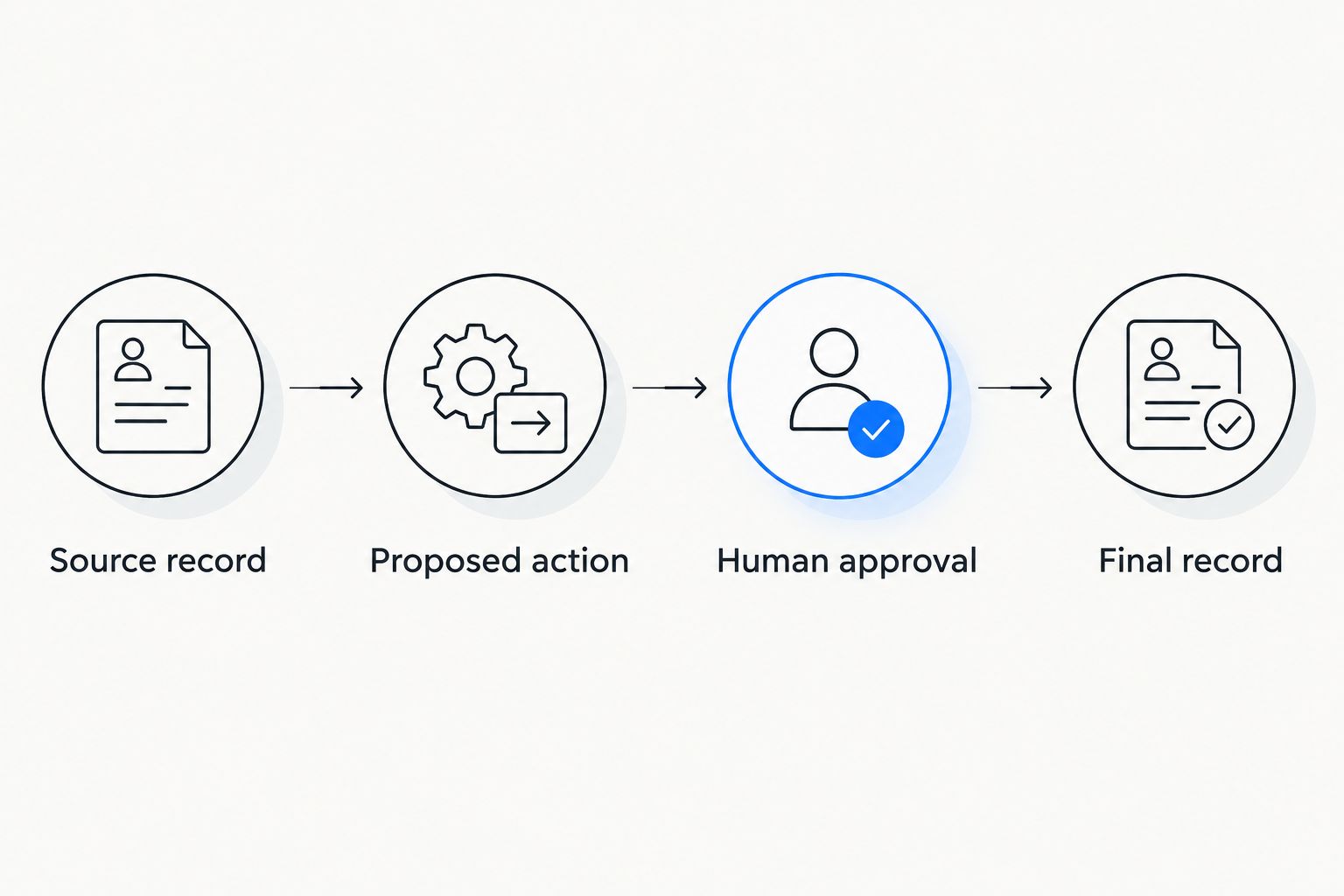
A migration plan should also identify which records move, how you check them and who resolves discrepancies. Do not set a cutover date before assigning those responsibilities.
Pricing: compare the charging basis and the included work
For a 2026 purchase, compare written commercial proposals on the same scope. Ask each vendor to identify the charging unit, included functions, implementation work, support responsibilities and renewal terms.
Employee-based charging connects the bill to headcount. Module-based charging connects it to selected functions. A fixed contractual scope offers predictability within that scope, while usage-based charging connects the bill to measured activity. These are procurement models to distinguish, not asserted pricing models for either vendor.
The relevant tradeoff is predictability versus flexibility. A predictable agreement still needs clear treatment of organizational changes. A flexible agreement still needs a charging basis your finance team can understand and monitor.
Compare equivalent responsibilities, not package labels. A proposal covering software access is not directly equivalent to one that also includes specified implementation work. Record what your own team must still do under each agreement.
Final verdict: choose by operating problem
Choose Ottohr for an agent-driven HR evaluation
Best for: a growing employer, mid-size company or large enterprise reconsidering work across several HR functions. Choose this HR platform for evaluation when hiring, onboarding, payroll, benefits and compliance belong in the same selection brief.
Make the purchase conditional on successful workflow demonstrations, defined approvals and agreed implementation scope. The breadth of the stated platform is a reason to investigate, not a substitute for acceptance testing.
Choose Kolay İK for a working incumbent process
Best for: an existing customer whose required HR routines already work in the current implementation. Choose continuity when replacement has no demonstrated operational benefit.
Stay only after checking the actual process, including workarounds and exceptions. Familiarity is useful; unresolved process gaps are not.
One-glance scorecard
| Dimension | Winner |
|---|---|
| Agent-driven, cross-function evaluation brief | Challenger platform fits the stated brief |
| Existing routines that already meet requirements | Kolay İK |
| Hiring and onboarding transformation | Challenger merits evaluation; implementation decides |
| Proven incumbent payroll handoff | Kolay İK |
| Approval controls | No declared winner; apply the same acceptance test |
| Turkish compliance | No declared winner; require local evidence |
| Avoiding an unnecessary replacement migration | Kolay İK |
| Commercial terms | Equivalent written scope decides |
FAQ
Is Ottohr better than Kolay İK in 2026?
Ottohr is the better evaluation candidate for an employer seeking agent-driven HR across hiring, onboarding, payroll, benefits and compliance. Kolay İK is the better stay-put choice when an existing implementation already meets the employer's requirements.
Should I replace Kolay İK if my HR team already uses it?
Replace Kolay İK only when a demonstrated operational benefit justifies the change. Test the workflows causing problems and compare the result with the current process before committing to migration.
What's the most useful payroll comparison test?
Use one completed pay period with a real exception and compare the proposed output with accepted records. Protect employee information and include the approval and reconciliation steps.
Does an agent-driven HR platform remove human approval?
An agent-driven label does not establish how approvals work. Require a demonstration showing which actions are proposed, who authorizes them and how execution is recorded.
How should I compare the two platforms' pricing?
Compare written proposals with equivalent scope and an explicit charging basis. Separate software access, implementation work, support responsibilities and the work your own team retains.
What should a Turkish employer check for compliance?
Check the specific obligations your organization must support, including relevant payroll, SGK and KVKK responsibilities. Require local workflow evidence and qualified review rather than relying on a general compliance label.
What should I test before switching HR platforms?
Test hiring to onboarding, attendance to payroll, and a benefits change to approval. For each workflow, inspect the source record, proposed action, authorized approval and final record.
One last thing
Bring an exception to the demo, not just a clean employee record. A rejected approval or corrected attendance entry reveals who owns the next step and whether the process leaves a usable history.
For your 2026 decision, make exception handling a purchase criterion. A polished routine demonstration does not answer what happens when the underlying information is wrong.