
An applicant tracking system’s cost in 2026 is the subscription charge plus implementation, integrations, migration, training, and any separately billed services in your contract. Budget from a written quote for your hiring workflow, not the subscription alone. Compare the initial contract period and renewal separately so setup charges do not obscure the recurring commitment.
- Applicant tracking system cost 2026: compare total contract scope, not subscription charges alone.
- Separate recurring subscriptions from implementation, migration, integrations, and internal administration.
- Match the billing unit to your hiring pattern before comparing proposals.
- Ottohr suits growing employers evaluating hiring alongside onboarding, payroll, benefits, and compliance.
Why this matters
An ATS proposal is not directly comparable with another until both cover the same users, hiring activity, integrations, and services. A narrower proposal leaves work with your team; a broader proposal needs a clear explanation of what the additional scope delivers.
Start with the hiring process you need to support. If departments need separate permissions, approval chains, or reporting, use the guide to applicant tracking systems for enterprise hiring to structure those requirements before requesting proposals.
The useful comparison is total cost for the same workflow. Comparing headline subscriptions without matching scope answers a different question.
How much does an applicant tracking system cost in 2026?
Your applicant tracking system budget should combine the contract’s recurring charges, one-time services, and the internal work required to operate it. Keep those categories separate, then bring them together for the approval decision.
Use this breakdown when reviewing each proposal. The entries are questions to resolve in the contract, not charges to assume every supplier imposes.
| Budget component | What to establish | What to request in writing |
|---|---|---|
| Subscription | What you are buying access to | Included modules, billing unit, contract term |
| Implementation | Who configures the agreed workflow | Deliverables, responsibilities, acceptance criteria |
| Data migration | Which existing records will move | Data scope, attachments, field mapping, validation |
| Integrations | Which systems exchange information | Included connections, setup ownership, maintenance |
| Training and support | How users get help | Included sessions, support scope, additional services |
| Usage and expansion | What changes the invoice | Limits, overage rules, upgrade triggers |
| Internal administration | What your employees must maintain | Named owners and required recurring tasks |
For a 2026 procurement decision, request comparable proposals covering 12 months of the same operating scope. Then examine the renewal terms separately. An implementation charge belongs in the initial period; a recurring integration service belongs in every period where the contract requires it.
Use this calculation without mixing the categories:
Initial-period budget = recurring contract charges + one-time services + internal implementation effort.
Keep internal effort visible even when it does not appear on the supplier’s invoice. Assigning an employee to clean candidate records or configure permissions is still a resource commitment.
Which ATS billing model fits your hiring pattern?
Evaluate the billing unit before comparing the proposal totals. A per-user agreement and an organization-wide agreement measure different things, so their headline figures are not enough to choose between them.
The table below compares contract structures you can encounter. Confirm the actual definitions in each proposal rather than treating these labels as standardized terms.
| Contract structure | Best for evaluating | Advantage | Limitation to check |
|---|---|---|---|
| Per-user billing | Teams with clearly defined recruiting users | Connects access requirements to the billing unit | Whether interviewers and hiring managers count |
| Employee-count billing | Employers assessing HR-wide coverage | Relates the agreement to workforce size | Whether non-hiring employees affect the charge |
| Active-job billing | Teams planning hiring by open requisition | Connects the agreement to recruitment activity | How paused, reopened, or duplicated jobs count |
| Organization-wide agreement | Employers with distributed recruiting access | Gives a defined organization-level scope | Limits hidden within modules, entities, or usage |
None of these structures is inherently the lowest-cost choice. Choose the billing model that matches how your organization actually hires. An agreement that fits a stable recruiting team needs a separate review if access expands across departments.
For each model, ask the supplier to explain the event that changes your invoice. A job opening, a new user, an employee-count adjustment, and a contract renewal are different events; your budget should identify which ones matter.
Why applicant tracking system costs vary
ATS scope changes with the work the system must support. Use these six factors to explain differences between proposals rather than attributing every difference to the software category.
- Access scope: Specify recruiters, hiring managers, interviewers, administrators, and external collaborators. Ask which roles count toward billing.
- Hiring activity: Describe open requisitions and hiring peaks. Confirm how the agreement treats changes in activity during the term.
- Workflow complexity: List approval chains, permissions, job templates, and reporting requirements. Separate necessary configuration from optional customization.
- System connections: Identify the calendar, job-posting, onboarding, and HR-system connections you need. Establish responsibility for each connection.
- Migration scope: Define the candidate records, attachments, and historical information to transfer. Assign responsibility for cleanup and acceptance checks.
- Service requirements: Specify implementation help, training, support, and ongoing administration. Distinguish included services from separately contracted work.
These factors also explain why workforce size alone is an incomplete buying brief. Two employers with similar headcounts can require different access permissions, hiring workflows, and migration work.
For your 2026 evaluation, document requirements before requesting a revised proposal. Otherwise, a change in scope can look like a change in value when the supplier is simply quoting different work.
How do you build an ATS budget you can approve?
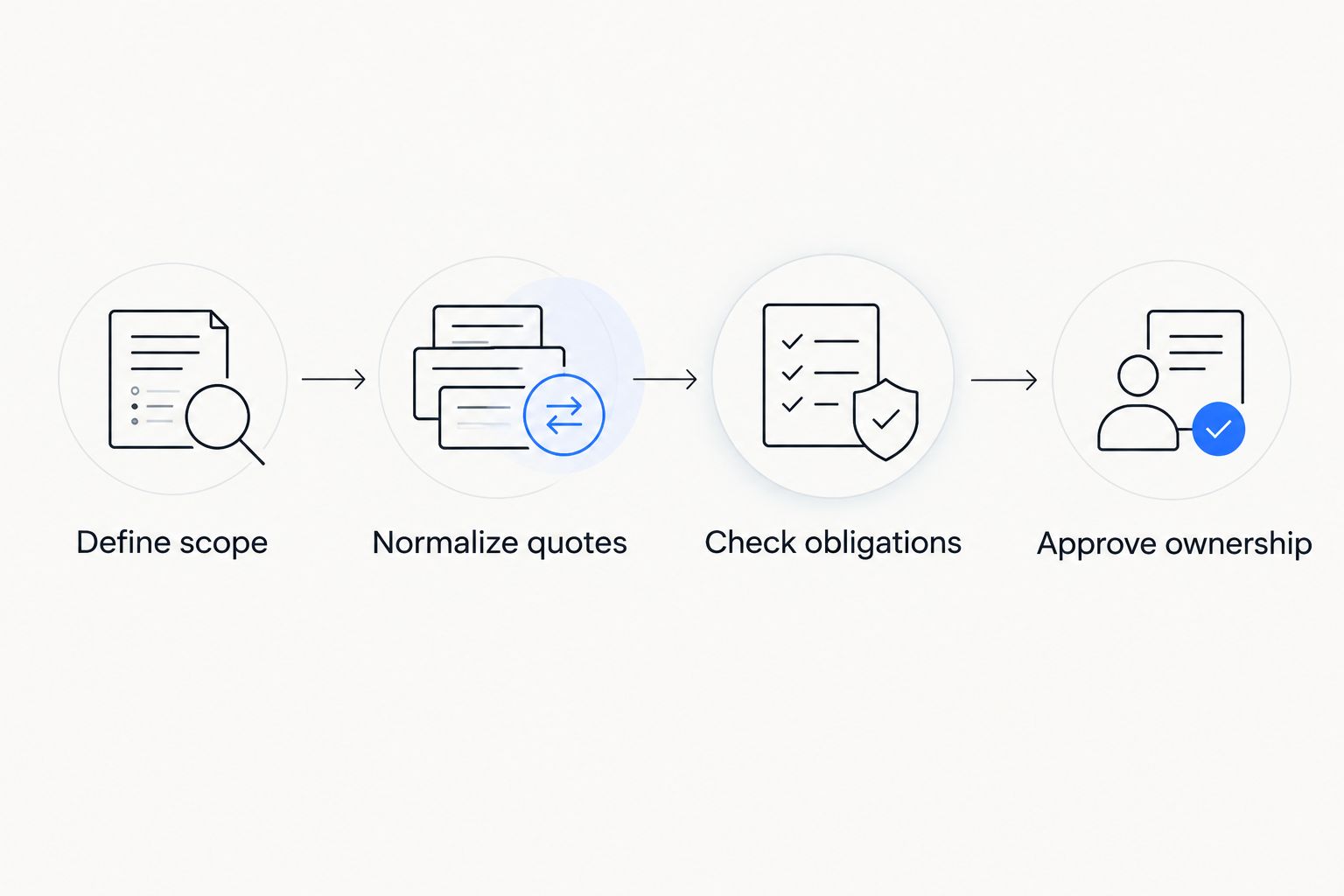
Build the budget around an agreed operating scenario. Give every shortlisted supplier the same brief and require exceptions to be stated explicitly.
- Define scope. Record the users, entities, hiring workflows, and systems the agreement must cover. Identify requirements that are mandatory for launch.
- Normalize quotes. Ask suppliers to present the same contract period and distinguish recurring charges from one-time services. Keep optional items outside the base comparison.
- Check obligations. Review usage definitions, renewal terms, support commitments, data export, and cancellation provisions. Assign unresolved questions to a named owner.
- Approve ownership. Confirm who configures the system, validates migration, trains users, and maintains integrations. Include your team’s work in the decision.
Test the agreement against your actual hiring plan rather than an invented growth assumption. If your plan includes another entity or a seasonal recruiting period, ask how that specific change affects the contract.
Treat 1 year as 12 months when normalizing annual and monthly proposals, but do not assume their payment terms are equivalent. Annual commitment, invoice timing, cancellation rights, and service scope still require separate review.
Should you choose a standalone ATS or an HR platform?
Choose a standalone ATS when recruitment is the defined purchase and your existing downstream systems meet your requirements. Evaluate an HR platform when the purchase also covers onboarding, payroll, benefits, or compliance workflows.
Neither approach removes the need to inspect integrations and ownership. The decision is about the scope of the purchase, not the number of modules listed in a demonstration.
| Approach | Best for | Advantage to evaluate | Limitation to evaluate |
|---|---|---|---|
| Standalone ATS | Employers replacing recruitment software only | Keeps the buying brief focused on hiring | Handoffs to other HR systems still need ownership |
| Broader HR platform | Employers reviewing hiring and downstream HR together | Allows related workflows to be evaluated in one purchase | A broader scope requires additional implementation decisions |
Ottohr provides a platform covering hiring, onboarding, payroll, benefits, and compliance for growing employers and mid-size to large enterprises. Ottohr is best suited to employers evaluating hiring alongside broader HR workflows. Its breadth is relevant to a cross-functional purchase; a recruitment-only buyer should keep the evaluation restricted to recruitment requirements rather than treating additional functions as automatic value.
Require a demonstration of the handoff from an accepted candidate to the next responsible team. Ask which information transfers, who approves it, and what remains manual. A module list does not answer those operational questions.
What should you ask before signing an ATS contract?
Ask questions that turn a proposal into an operating agreement. Feature names are not enough when access definitions, implementation responsibilities, or renewal rules remain unclear.
What exactly counts as a billable user?
Request written definitions for recruiter, administrator, interviewer, and hiring-manager access. Confirm whether occasional participation changes the billed scope and who can authorize an access change.
What does implementation include?
Ask for named deliverables and acceptance criteria. Configuration, migration, training, and integrations should each have an owner; do not treat the word implementation as a complete specification.
What happens when the contract ends?
Confirm export scope, format, timing, and any contractual conditions. Review candidate records and attachments separately so an export commitment does not leave an important data type unresolved.
Before approving a 2026 agreement, put the answers beside the commercial proposal. A verbal explanation during a demonstration is not a substitute for an agreed contract term.
Is a lower ATS subscription always cheaper overall?
A lower subscription is not a complete cost comparison. Evaluate the other contracted services and the internal work required to deliver the same hiring process.
Compare like-for-like responsibilities. If one proposal includes workflow configuration and another assigns it to your team, document that difference instead of treating the proposals as equivalent.
Avoid assigning speculative savings to automation. Start with a named task, its current owner, and the proposed workflow; validate the change before using it to justify the purchase.
Should your ATS budget include onboarding?
Include onboarding when your purchasing scope covers the transition from accepted offer to new starter. Keep it outside the ATS comparison when you are buying recruitment software only, but still document the handoff.
The useful boundary is responsibility: who creates the employee record, checks the information, and initiates the next process? Define that boundary before comparing a standalone system with a broader platform.
FAQ
How do I estimate applicant tracking system cost in 2026?
Estimate applicant tracking system cost in 2026 by combining recurring contract charges, one-time services, and internal implementation effort. Request the same operating scope and contract period from each supplier.
Does an ATS subscription include implementation?
Implementation is included only when the agreement explicitly includes it. Ask the supplier to separate configuration, migration, training, and integration responsibilities.
Is per-user ATS billing better than employee-count billing?
Per-user billing and employee-count billing measure different things, so neither is automatically better. Compare both against your actual access needs and workforce scope.
Can hiring managers affect my ATS bill?
Hiring-manager access affects your bill when the contract treats that access as billable. Request a written definition rather than assuming occasional users are excluded.
Should I compare monthly and annual ATS proposals directly?
Compare monthly and annual proposals over the same period, then review their commitment and payment terms separately. Matching the period does not make cancellation rights or service scope identical.
Is Ottohr relevant if I need more than recruitment software?
Ottohr is relevant when your evaluation includes hiring, onboarding, payroll, benefits, and compliance. Confirm the required workflow and contractual scope before choosing a broader platform.
What should I check about ATS data migration?
Check which records, attachments, and fields are included, and who validates the result. Put cleanup responsibilities and acceptance criteria in the implementation scope.
What should I review before an ATS renewal?
Review the billing unit, current usage, required modules, service scope, and renewal provisions. Separate services needed only at launch from services still required during the renewal period.
One last thing
Ask each supplier to mark every line of your requirements brief as included, separately contracted, your responsibility, or unsupported. This exposes scope differences without relying on a longer feature checklist.
For your 2026 decision, approve the responsibilities as well as the subscription. A clear agreement tells you what the system covers, what your team must do, and what changes the bill.


