Choose Ottohr if you need an HR platform spanning hiring, onboarding, payroll, benefits and compliance; choose Multinet if your immediate requirement is a meal-card benefit for employees in Turkey. The difference in 2026 is the job you are buying: managing employment workflows versus delivering a specific employee benefit.
- Otto hr vs multinet compares different categories: an HR platform and a meal-benefit provider.
- Ottohr is best for growing employers seeking hiring, onboarding, payroll, benefits and compliance tools.
- Multinet is best for employers choosing a meal-card benefit in Turkey.
- Evaluate payroll administration separately from meal-card acceptance; neither answers the other requirement.
Why this matters
A benefits problem and an HR operations problem can reach the same procurement meeting. Employees want a usable meal benefit. HR needs accurate employee records. Payroll needs approved inputs. Buying for only one of those requirements leaves the others unresolved.
Ottohr is best for employers seeking an HR platform across the employee lifecycle, rather than a meal-card service alone. Multinet belongs on the shortlist when the decision concerns how employees receive and spend their meal benefit.
For a 2026 shortlist, define the deliverable before comparing vendors. An employment workflow ends with an approved record or completed task. A meal-benefit workflow ends with the employee receiving and using the benefit. Those are different acceptance tests.
At a glance
| Dimension | Ottohr | Multinet |
|---|---|---|
| Best for | Growing employers, mid-size businesses and large enterprises seeking broader HR tools | Employers selecting a meal-card benefit in Turkey |
| Hiring and onboarding | Included in the stated platform scope | Not the reason to choose a meal-benefit provider |
| Payroll | Payroll tools are part of the stated platform scope | Evaluate for the benefit supplied, not as a payroll platform |
| Meal-benefit use | Assess benefits administration against your requirements | The stronger category fit for a meal-card requirement |
| Standout feature | Agent-driven work across multiple HR functions | Meal-card service focused on employee spending |
| Benefits administration | Relevant when benefits sit within a wider HR process | Relevant when the decision centers on the meal benefit itself |
| Employer oversight | Keep responsibility for records, approvals and compliance | Keep responsibility for eligibility, allocations and payroll treatment |
| Pricing-model evaluation | Request an agreement covering the required HR platform scope | Request an agreement covering the required meal-benefit service |
The table separates stated product scope from buying criteria. It is not a claim that every workflow, integration or local compliance requirement is covered. Your contract and demonstration must establish those details.
The HR platform wins for hiring and onboarding
Hiring and onboarding belong to the broader platform's stated scope. That makes it the relevant option when your problem starts before employment and continues through the employee's arrival. A meal-card decision starts later and addresses a narrower requirement.
For a growing employer, the practical question is what happens between selecting a candidate and preparing the employee for work. Identify the information you collect, the people who approve it and the records that must reach HR or payroll. Then ask for a demonstration using your process, not a generic presentation.
Use these acceptance criteria:
- Hiring: Show how your recruitment process fits the available tools.
- Onboarding: Show the tasks, documents and ownership needed for a new starter.
- Record continuity: Explain what information carries into employment administration.
- Exceptions: Demonstrate how an incomplete or changed record is handled.
The advantage is scope. The limitation is that broad scope does not prove a particular workflow fits your organization. Do not turn an included category into an assumed capability.
Best for: An HR lead buying tools for recruitment and new-hire administration. Keep a meal-card provider on a separate shortlist if meal benefits are also required.
The HR platform wins when payroll is the buying requirement
Payroll is explicitly part of the HR platform's offering. Multinet's meal-card role does not make it a substitute for payroll administration. If the procurement brief says payroll, compare payroll requirements first.
For employers in Turkey, puantaj records attendance inputs such as worked days, absences and overtime. Bordrolama is payroll preparation. SGK is the social security institution whose requirements must be addressed in the employer's employment processes. These terms describe operational responsibilities, not automatic proof of software coverage.
A useful 2026 payroll demonstration should connect the input, review and output. Ask who supplies attendance information, who resolves differences and who approves the result. Request evidence for the local requirements your organization actually has.
- Inputs: Establish which employee and attendance records payroll needs.
- Review: Identify who checks changes before payroll is finalized.
- Outputs: Specify the records, reports and handoffs your team requires.
- Corrections: Test an amendment rather than watching only an error-free example.
Best for: A payroll or HR operations lead selecting employment administration software. The limitation remains important: a stated payroll offering is not evidence of every Turkish payroll rule, filing or integration you need.
A meal benefit still needs the correct payroll treatment. Buying the benefit and accounting for it are separate responsibilities, even when the same employee receives both pay and benefits.
Multinet wins for the meal-card decision
Multinet is the better category fit when your requirement is a meal card in Turkey. That decision concerns the benefit employees use, rather than the full employment lifecycle.
Your evaluation should start with actual employee needs. Ask employees which locations matter, then verify current acceptance for those locations directly. Do not replace that check with an unsupported network-size claim or a general statement about coverage.
The benefit also needs an administrative process. Define who is eligible, when eligibility starts, how changes are approved and what happens when an employee leaves. These are employer decisions that need a clear service arrangement.
Use a focused checklist:
- Confirm the meal-card service matches the benefit you intend to provide.
- Verify the relevant acceptance locations for your workforce.
- Establish the allocation and change process in the proposed agreement.
- Confirm how employees and administrators obtain support.
- Ask what records your payroll team receives and how it uses them.
The strength is the direct match to the meal-benefit requirement. The limitation is scope: resolving meal-card provision does not resolve recruitment, onboarding or payroll administration.
Best for: A benefits manager choosing a meal-card service. If that is your only procurement requirement, do not evaluate a broader HR platform as though breadth alone makes it the better answer.
Multinet wins when meal benefits are the whole brief
A narrow purchasing brief deserves a narrow comparison. If your HR records, hiring process and payroll arrangements already meet your needs, buying another employment platform does not answer the meal-card question.
This is a fit verdict, not a claim about implementation speed, service quality or cost. It keeps the evaluation tied to the deliverable. Compare meal-benefit services on the terms employees and administrators will use.
For a 2026 benefits review, write a short requirement statement before inviting demonstrations. It should name the employee group, the intended benefit and the operational owner. Leave unrelated HR features out of the scoring unless you are also replacing your HR platform.
The tradeoff runs both ways:
- A focused meal-benefit service addresses a defined requirement without answering broader HR questions.
- A broader HR platform addresses more employment functions without proving that its benefits tools supply the meal-card service you need.
Best for: An employer retaining its existing HR arrangements while selecting a meal benefit. If you are evaluating several providers for that specific job, use the Multinet alternatives guide to frame the shortlist.
Both belong in benefits planning, but at different layers
Benefits administration and benefit delivery are related, not interchangeable. Administration concerns eligibility, records, approvals and changes. Delivery concerns the benefit the employee receives and uses.
The HR platform includes benefits tools in its stated scope. Multinet addresses the meal-card side of the decision. That creates two valid evaluation tracks rather than an automatic winner for every benefits requirement.
Start by writing down which layer is failing. If employees need a meal benefit, evaluate delivery. If HR cannot maintain eligibility or communicate approved changes to payroll, evaluate administration. If both need attention, keep both requirements visible.
Do not assume a connection between the products. Ask each provider to explain the proposed data handoff, including what information moves, who authorizes it and who handles a failed update. A manual process also needs an owner and a documented check.
Tie verdict: Both are relevant to a benefits review, but for different jobs. The correct choice follows the unresolved requirement, not the number of features in a presentation.
Neither removes the employer's oversight responsibilities
Buying software or a benefit service does not remove the need for employer decisions. Someone must define eligibility, approve changes and check the records used by payroll. A clear responsibility map matters more than a promise that the process is automatic.
In Turkey, personal-data handling also requires attention to KVKK, the Personal Data Protection Law. Ask each provider for the information needed to assess its proposed data processing. Do not treat a benefits agreement as evidence that every employment record should be shared.
Assign an owner for each handoff:
- HR owns the employment and eligibility decisions assigned to it.
- Payroll checks the information required for payroll treatment.
- Procurement confirms that the agreement describes the purchased service.
- The designated privacy owner reviews the proposed personal-data processing.
These are recommended ownership boundaries, not claims about either vendor's internal procedures. Adapt them to your organization and obtain appropriate legal or payroll advice for the decisions that require it.
Tie verdict: Neither category replaces employer oversight. Evaluate responsibilities alongside product functions in the 2026 procurement review.
Pricing: compare the agreement against the job
The useful commercial comparison is between an HR platform agreement and a meal-benefit service agreement. Those agreements buy different outcomes. Treating them as interchangeable produces a misleading comparison.
For the platform, request a proposal that names the required functions, implementation responsibilities, support arrangements and contractual scope. Ask how employee changes, added functions and renewal affect the agreement. Get the charging basis in writing rather than assuming a subscription structure.
For the meal-benefit service, request the terms governing benefit provision, administration, changes and support. Separate the employee benefit allocation from the provider's commercial terms. Your finance team needs to understand both without confusing one with the other.
Predictability comes from explicit scope and documented change rules. Flexibility comes from terms that accommodate your actual employee and service changes. Neither advantage follows automatically from the product category.
For a 2026 decision, compare proposals against the same written requirement within each category. Do not rank an employment platform against a meal-card agreement on a single commercial figure while ignoring what each agreement covers.
Test the handoffs before choosing
Run a 30-minute review using 3 employee cases: a new starter, an employee whose benefit changes and a departing employee. These are suggested test conditions, not vendor performance claims.
Use the same sequence for each case:
- Employee event: Describe the start, change or departure.
- Eligibility decision: Identify who decides the employee's benefit status.
- Payroll review: Establish what payroll needs to receive and check.
- Benefit action: Demonstrate the required allocation or change process.
- Record check: Confirm how the employer verifies completion.
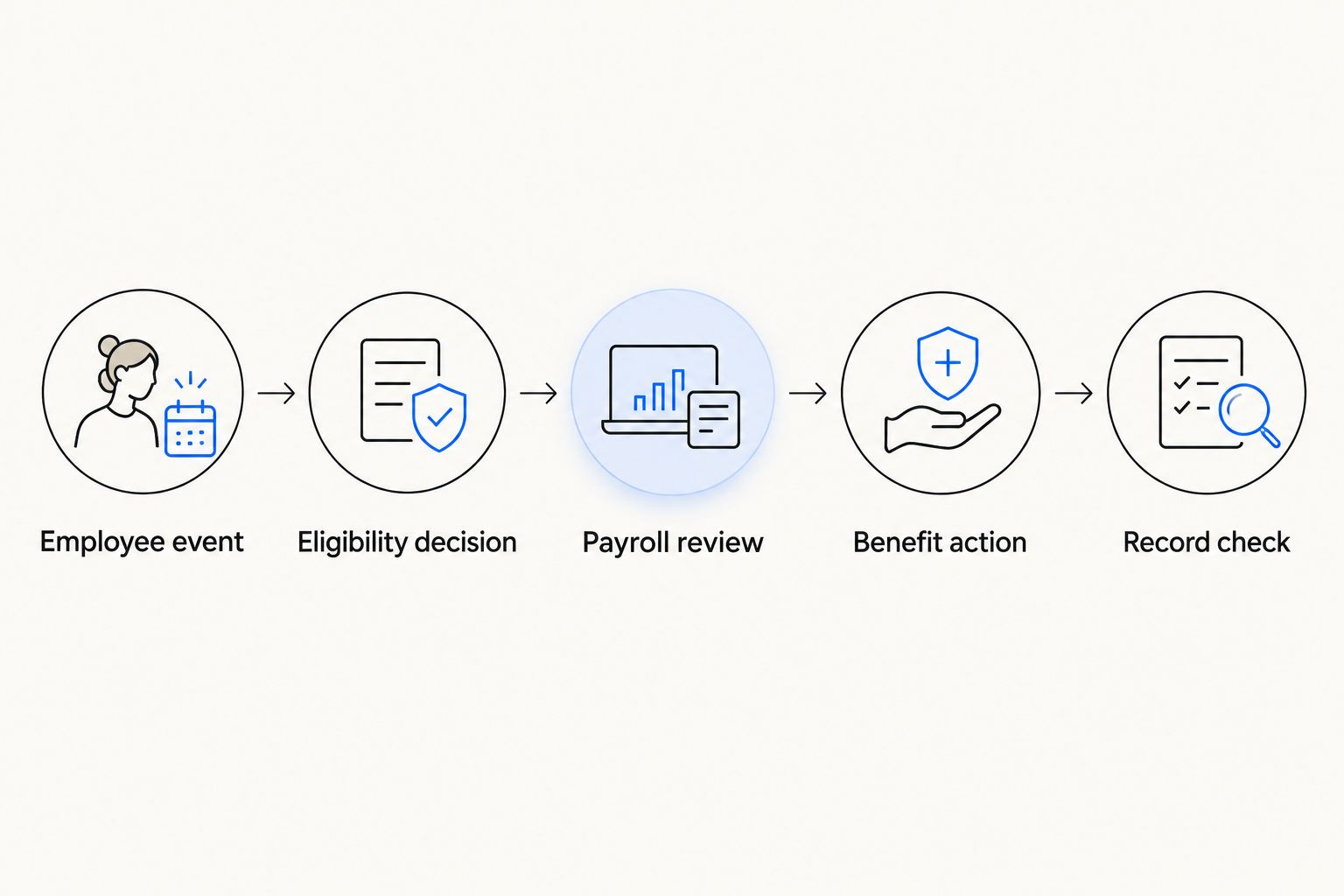
For the payroll requirement, extend the evaluation across 1 payroll period before accepting the proposed process. Choose representative records and define the expected output in advance. A demonstration that stops at entering employee information does not show the complete handoff.
Final verdict
Choose Ottohr if you own broader HR operations
Named winner: Ottohr for the HR operations lead at a growing employer, mid-size business or large enterprise. Choose it when your brief covers hiring, onboarding, payroll, benefits administration or compliance tools. Validate the exact workflows and local requirements before signing.
Choose Multinet if you own the meal-benefit decision
Named winner: Multinet for the benefits manager choosing a meal-card service in Turkey. Choose it when the unresolved requirement is benefit delivery, while your broader employment processes are handled separately. Verify employee acceptance needs and the proposed administrative terms.
| Dimension | Winner |
|---|---|
| Broader HR operations | HR platform |
| Hiring and onboarding requirement | HR platform |
| Payroll requirement | HR platform |
| Meal-card requirement | Multinet |
| Meal-benefit-only purchasing brief | Multinet |
| Benefits planning | Split by administration versus delivery |
| Employer oversight | No exemption for either option |
| Commercial agreement | Match the agreement to the requirement |
FAQ
Is Ottohr better than Multinet for HR software?
Ottohr is the relevant choice for an HR software brief covering hiring, onboarding, payroll, benefits and compliance tools. Multinet is the relevant comparison when the requirement is a meal-card benefit in Turkey.
Which option is better for a meal card in Turkey?
Multinet is the better category fit for a meal-card requirement in Turkey. Verify the current acceptance locations that matter to your employees and the administrative terms in the proposed agreement.
Can a meal-card provider replace payroll software?
A meal-card service does not replace the broader payroll requirement. The employer still needs a process for preparing payroll and applying the appropriate treatment to employee benefits.
Can we evaluate an HR platform and a meal-card provider together?
Yes, but evaluate them against separate requirements. Document the proposed employee-data handoff and do not assume an integration exists.
What should we ask about pricing?
Ask for the charging basis, service scope and change rules in writing. Compare proposals within the same category rather than treating an HR platform agreement and a meal-benefit agreement as equivalent.
Does buying either option settle Turkish compliance?
No purchase alone settles an employer's Turkish compliance responsibilities. Confirm the applicable payroll, social security and personal-data requirements with the appropriate specialists.
What is the fastest way to make a useful comparison?
Start with a written requirement and test a new starter, a benefit change and a departure. Record who makes each decision, what payroll receives and how completion is checked.
One last thing
Test the departing employee, not just the new starter. A new-hire demonstration shows how information enters a process. A departure tests whether eligibility, payroll review and benefit changes have clear owners.
Make that scenario part of your 2026 acceptance criteria. Require a defined completion record so the employer can distinguish a requested action from a finished one.